
How Long Does a Sectional Couch Take to Dry After Cleaning?
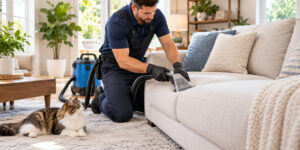
A sectional couch can take anywhere from a few hours to 24 hours to dry after cleaning. In many cases, professionally cleaned
Phoenix homes deal with carpet odors a little differently than homes in many other parts of the country. Between desert dust, tracked-in grit, pet traffic, and long stretches of indoor living with the AC running, carpets can start to hold onto smells even when they still look fairly clean.
That is why the best carpet deodorizer is not always the strongest-smelling powder on the shelf. In many cases, what works best depends on the type of odor you are trying to fix. Some products are useful for a quick refresh. Others help with mild pet smells. And some situations go beyond deodorizer altogether and need a deeper clean.
If you are trying to keep your carpets fresher in Phoenix, this guide breaks down what actually works, what tends to disappoint, and when it makes more sense to stop layering products and deal with the source.
Phoenix homes collect a lot of fine dust, even when you vacuum regularly. That dust settles into carpet fibers, mixes with foot traffic, and slowly creates that stale, lived-in smell many homeowners notice before guests do.
Add pets, kids, shoes, spills, and everyday traffic, and the issue usually gets worse. Even homes that look tidy can develop odor buildup below the surface. Carpet fibers can trap debris, dander, food particles, and residue that a standard vacuum does not fully remove.
Heat also changes how people notice odors. In the summer, homes are closed up more often, air circulates constantly, and certain smells become more noticeable. During monsoon season or after any moisture event, old pet odor can also become stronger again.
A carpet deodorizer can help reduce or mask light odors between cleanings. That makes it useful for maintenance, especially in busy households. If your carpet just needs a quick refresh after normal daily use, a good deodorizer may be enough to improve how the room smells.
What it cannot do is solve deep buildup in the carpet or padding. If odor is coming from old spills, repeated pet accidents, heavy dust accumulation, or residue left behind by DIY cleaning, a deodorizer is only a temporary surface fix.
This is where a lot of homeowners get frustrated. They keep adding more powder or spray because the smell improves for a day or two, then comes right back. In those cases, the issue is not that you picked the wrong deodorizer. The issue is that the odor source is still there.
There is no single product that works best for every situation. The right option depends on whether you are dealing with a light stale smell, pet odor, or a recurring problem that keeps coming back.
A light powder deodorizer is usually the most practical option for general maintenance. It can help freshen carpet before company comes over or after a high-traffic week in the house. This type of product is easy to use and widely available.
The downside is that powders are often overused. In Phoenix homes, that can backfire. Too much powder can settle deep into the carpet, mix with dust, and add to buildup over time. If you use a powder, use it lightly and vacuum slowly and thoroughly afterward.
If you have dogs or cats, a pet-focused deodorizer usually makes more sense than a standard carpet freshener. These products are made for stronger odors and can help between deeper cleanings.
They work best for mild odor control, not severe contamination. If the smell is tied to repeated pet accidents, especially urine that has soaked below the carpet surface, a pet deodorizer may improve the smell for a short time without fully solving it.
For deeper pet issues, HydroCare’s pet odor and stain removal guide is a helpful next read because it explains why odor tends to linger and what homeowners can do early before the problem spreads.
Enzyme-based cleaners are often the better choice when the smell is tied to urine, vomit, or other organic messes. Instead of simply covering the smell, these products are designed to break down odor-causing material.
They are not a cure-all, but they are usually more effective than scented powders when you are dealing with a true pet accident. The key is treating the problem area quickly and following product directions carefully. If the odor has already reached the carpet padding, even a good enzyme cleaner may not be enough on its own.
Baking soda is the classic DIY option because it is simple, inexpensive, and easy to find. For light odor control, it can help. But it should be used sparingly.
Many homeowners treat baking soda like a miracle fix. It is not. If you use too much or use it too often, it can become part of the buildup in the carpet. In a dusty Phoenix home, that can make routine maintenance harder instead of easier.
The best way to choose a deodorizer is to start with the odor itself. Different smells point to different problems, and not all of them should be treated the same way.
This is one of the most common carpet complaints in Phoenix. The room does not smell bad exactly, but it does not smell clean either. In this case, a light deodorizer can help, but only after a good vacuuming.
If the smell keeps returning quickly, the carpet probably needs more than a surface refresh. Built-up dust, tracked-in debris, and old residue can all contribute. In many homes, professional carpet cleaning in Phoenix is what finally resets the carpet and gets rid of that dull, stale smell.
For homes with pets, a pet-focused deodorizer or a targeted enzyme treatment often works better than a general carpet freshener. The sooner you treat accidents and the more consistent you are with vacuuming, the easier it is to stay ahead of odor.
If the smell tends to return in the same areas, that is a sign the issue may be deeper than the surface. Hallways, bedroom corners, and favorite pet spots usually need more attention than the rest of the carpet.
This is one of the biggest signs that odor is sitting deeper in the carpet or padding. Homeowners often assume the cleaning made the smell worse, but more often it revealed what was already there.
Moisture can reactivate old urine residue, and incomplete extraction can leave behind a damp, musty smell. If you have been dealing with that issue, this is also a good time to read how long carpet takes to dry after a professional cleaning so you know what is normal and what is not.
A musty smell points to moisture, residue, or poor drying more often than normal foot traffic. Deodorizers do not solve that. They may cover it for a little while, but the underlying problem usually stays put.
In Phoenix, even one isolated moisture issue can create odor if it is not handled properly. If water, leaks, or damp carpet are part of the story, it may be time to look at water damage cleanup in Phoenix instead of another carpet product.
Homeowners often have good intentions here, but a few common mistakes can make odor problems harder to solve.
A deodorizer should support carpet maintenance, not replace it. If you are constantly trying to freshen the same rooms, that usually means the carpet needs deeper attention.
The best results usually come from a routine, not a one-time product. Phoenix homes collect dust fast, so carpets stay fresher when maintenance is consistent.
Start with regular vacuuming, especially in traffic lanes, living rooms, entry areas, and rooms where pets spend the most time. If dust keeps showing up faster than expected, it is worth looking beyond the carpet too. HydroCare’s post on how often you should dust helps connect the dots between surface dust and the debris that eventually settles into carpet.
Use a deodorizer only when it makes sense. Lightly, occasionally, and with realistic expectations. For pet accidents, treat spots quickly instead of waiting for odor to set in. And when the carpet stops responding to normal upkeep, schedule a deeper cleaning before the problem gets worse.
In some homes, ongoing dust issues are also tied to airflow and circulation. If your house feels like it gets dusty again almost immediately after cleaning, it may be worth looking into air duct cleaning in Phoenix as part of the bigger picture.
There is a point where another powder or spray just is not the answer. If odors keep coming back, if the carpet feels dull even after vacuuming, or if you are dealing with repeated pet issues, professional carpet cleaning is often the more effective route.
That is especially true in Phoenix homes where fine dust gets ground into carpet over time. Surface products can help with maintenance, but they do not remove the deeper buildup that causes carpets to smell tired.
A deeper clean can lift embedded dirt, reduce odor-holding residue, and leave the carpet feeling fresher overall. It also gives you a better starting point if you want to maintain the carpet with occasional deodorizer use afterward.
At HydroCare Services, we know a lot of Phoenix homeowners have already tried powders, sprays, and DIY tricks before calling. Sometimes those products help for a while. Sometimes they do not do much at all. Our goal is to keep things simple and honest. If a light refresh is all you need, great. If the odor is tied to deeper buildup, pet traffic, or carpet that has not had a real reset in a long time, we help homeowners get back to a cleaner, fresher baseline with practical service and straightforward expectations.
The best carpet deodorizer for Phoenix homes depends on the kind of odor you are dealing with. For light maintenance, a powder deodorizer or mild pet-focused product may be enough. For spot problems, an enzyme cleaner is often the better choice. For recurring odor, the real fix is usually not more fragrance. It is removing what is trapped in the carpet.
If your carpet smells fine one day and stale the next, or if pet odor keeps creeping back no matter what you use, it may be time to stop chasing the symptom and address the source. That is what actually works.
For light odor control, a powder deodorizer is often the most practical choice. For pet-related smells, a pet-focused product or enzyme cleaner usually works better. The best option depends on whether the odor is surface-level or deeper in the carpet.
Baking soda can help with light odor freshening, but it should be used sparingly. Too much can add to buildup in the carpet, especially in dusty homes.
For mild pet smells, a pet-focused deodorizer may help. For urine or repeated accidents, an enzyme cleaner is usually the better choice. If the smell keeps returning, the odor may be below the surface.
Moisture can reactivate old pet urine or trapped residue. In some cases, incomplete drying can also create a musty smell. That usually points to a deeper issue than surface odor alone.
Most homes do better with occasional use, not constant use. If you feel like you need it all the time, the carpet may need a deeper cleaning rather than another round of deodorizer.
If odor keeps coming back, if the carpet still smells stale after vacuuming, or if you are dealing with recurring pet spots, professional carpet cleaning usually makes more sense than continuing to apply surface products.
A sectional couch can take anywhere from a few hours to 24 hours to dry after cleaning. In many cases, professionally cleaned

Professional upholstery cleaning in Phoenix, AZ typically costs around $100 to $300 for a standard service, although the final price depends on
Yes, professional couch cleaning can often remove or significantly reduce cat urine smell. The final result depends on how much urine reached