
How Long Does a Sectional Couch Take to Dry After Cleaning?
A sectional couch can take anywhere from a few hours to 24 hours to dry after cleaning. In many cases, professionally cleaned
A sectional couch can take anywhere from a few hours to 24 hours to dry after cleaning. In many cases, professionally cleaned upholstery dries within several hours, but thick cushions, deep foam, absorbent fabrics, and heavier cleaning can extend that time considerably.
Sectionals can also take longer than smaller sofas because there is simply more upholstery, padding, and cushion material holding moisture. The cleaning method, fabric type, amount of moisture used, airflow, and conditions inside your home all affect when the sectional is truly ready to use again.
Most couches need several hours to dry after professional cleaning. A sectional that received deeper water-based cleaning may take around 6 to 12 hours, while particularly thick or damp sections can sometimes need closer to 24 hours.
Low-moisture methods may dry within only a few hours. There is no exact drying time that applies to every sofa because two couches cleaned the same way can have very different fabrics and cushion construction.
| Cleaning Situation | Typical Drying Time |
|---|---|
| Low-Moisture Cleaning | A Few Hours |
| Professional Upholstery Cleaning | Several Hours |
| Deeper Water-Based Cleaning | Around 6–12+ Hours |
| Thick or Heavily Damp Sectional | Up to 12–24 Hours |
Treat these times as general expectations rather than guarantees. Your sectional should be completely dry before regular use, even if the expected drying window has passed.
One of the easiest mistakes is touching the top of a cushion, finding that it feels dry, and assuming the whole sectional is ready.
The outer upholstery may dry before moisture leaves the foam underneath. Seams, piping, cushion edges, tufted areas, and thick chaise cushions can remain damp after the visible surface feels normal.
Sectionals are larger and usually have more individual components than standard couches. Their construction can create areas where air does not circulate as freely.
That does not mean every sectional takes all day to dry, but several design features can increase drying time.
An L-shaped or U-shaped sectional may have several seats, back cushions, armrests, and a chaise. More material means more upholstery must be cleaned and dried.
Large sectionals can therefore remain damp in certain areas even when other sections are already dry.
Deep seat cushions are comfortable because they contain substantial foam and padding. That same construction can retain moisture longer than thin upholstery.
Chaise cushions and oversized seats deserve particular attention because moisture can remain inside even after the outer fabric begins to feel dry.
Water can settle around seams, piping, folds, and areas where cushions meet. These areas receive less airflow than flat, exposed upholstery.
Separating removable cushions after cleaning can help air reach these slower-drying areas.
Drying time is affected by more than the size of the couch. The cleaning technique and the way the sectional is constructed usually make the biggest difference.
If you want a deeper explanation of proper moisture control, extraction, fabric codes, and cleaning techniques, our guide on how to professionally clean a couch explains why careful cleaning matters before the drying process even begins.
A low-moisture treatment generally dries faster than a process that introduces more water into the upholstery.
Water-based extraction can provide a deeper clean for appropriate fabrics, but drying time depends heavily on how much moisture is applied and how effectively it is recovered afterward.
Synthetic upholstery such as polyester or some microfiber fabrics often releases moisture differently from absorbent natural fibers such as cotton or linen.
Fabric construction matters as much as the fiber itself, which is why cleaning and drying recommendations should match the individual piece of furniture.
Using more water does not automatically mean better cleaning. Excess moisture can move deeper into the cushion and extend drying considerably.
Effective extraction removes as much recoverable moisture as possible during cleaning. This is one reason properly performed professional upholstery cleaning in Phoenix can be preferable to repeatedly soaking a couch with a small DIY machine.
Moving air encourages moisture to evaporate. A couch in a cool room with steady airflow will generally dry more predictably than one left in a closed room with little air circulation.
Indoor humidity, air conditioning, room temperature, and cushion positioning can all change the result.
Phoenix’s dry climate can support faster evaporation, but homeowners should not assume the desert heat alone will dry a sectional quickly. Most furniture is drying inside an air-conditioned home, where indoor conditions matter more than the temperature outside.
Keeping air circulating across the upholstery is usually more useful than simply making the room hotter. During humid monsoon conditions, indoor drying may also take longer than you expect from a typical Phoenix day.
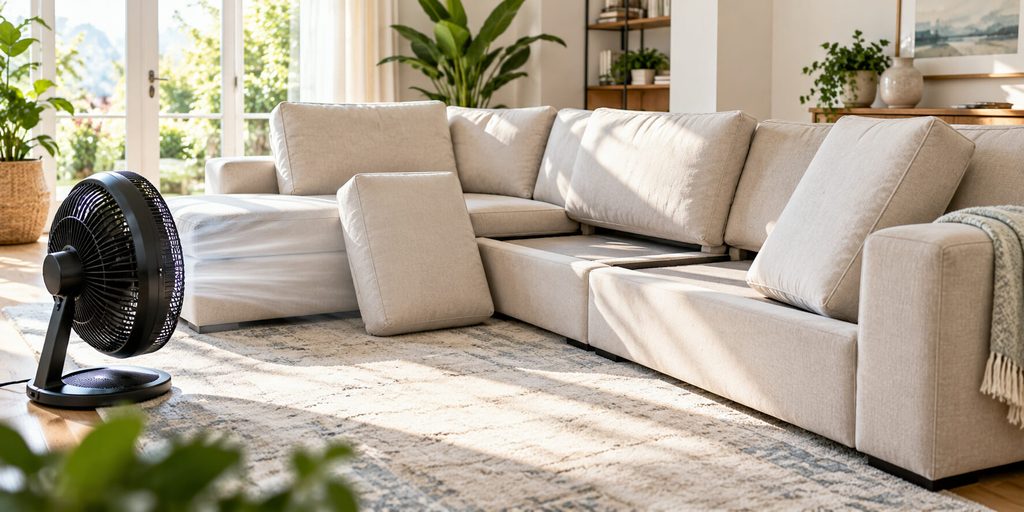
Good airflow is one of the safest ways to help upholstery dry. The goal is to allow moisture to escape evenly without exposing the fabric to excessive heat.
After cleaning, you can:
Avoid covering the sectional while it is damp. A blanket or furniture cover can trap moisture against the fabric and slow evaporation.
Opening windows can help when outside conditions are comfortable and dry, but it is not always the best choice in Phoenix.
On extremely hot, dusty, or humid days, your air-conditioned indoor environment may provide better drying conditions. Fans can increase airflow without bringing outdoor dust and heat into the room.
Concentrated heat is not recommended as a shortcut. High temperatures can affect certain fibers, fabric finishes, foam, dyes, and adhesives.
Use normal room conditions and steady airflow instead of placing a heater directly next to damp upholstery.
Do more than touch the center of one seat cushion. Check several areas before allowing everyone to start using the sectional normally again.
Pay particular attention to cushion edges, seams, undersides, the chaise, armrests, and places where two sectional pieces meet. Removable cushions should also be checked on both sides.
If an area feels unusually cool or clammy compared with surrounding upholstery, moisture may still be present.
Wait until the couch is completely dry rather than relying on a fixed number of hours. If your cleaner tells you to expect six hours but the cushions still feel damp after that period, give them additional time.
Sitting on damp upholstery can restrict airflow and may transfer dirt from clothing onto freshly cleaned fibers. Pressure can also push remaining moisture deeper into cushions.
A couch that remains noticeably wet the next day may have retained more moisture than expected. This can happen with very dense cushions, absorbent upholstery, limited airflow, or excessive water use during cleaning.
DIY machines can sometimes leave more moisture behind when repeated wet passes are made without enough extraction passes.
Increase airflow and keep the furniture uncovered. If the couch remains unusually wet, develops a persistent musty odor, or shows unexpected discoloration, contact the cleaning professional rather than repeatedly applying more products.
Professional cleaning can reduce unnecessary drying time because moisture application and extraction can be controlled more carefully. Proper equipment helps remove soil while also recovering water from the upholstery instead of leaving it deep inside the cushions.
Technique still matters. Professional cleaning does not mean every sectional will dry in exactly the same number of hours, but controlling moisture from the beginning helps prevent the excessive saturation commonly associated with DIY attempts.
HydroCare Services cleans sofas, oversized sectionals, cushions, chairs, and other upholstered furniture for homeowners and businesses throughout Phoenix, AZ. The cleaning approach is matched to the furniture’s fabric, condition, stains, and level of buildup rather than treating every couch exactly the same way.
If your sectional has accumulated body oils, spills, pet messes, dust, or everyday grime, professional sectional couch cleaning in Phoenix, AZ can refresh heavily used seating while keeping moisture control and proper drying in mind.
Once everything is completely dry, regular maintenance can slow down the buildup that makes sectionals look dull.
Vacuum the seats, backs, seams, and crevices regularly, especially in homes with pets. Rotate removable cushions when possible so the same areas are not taking all the wear. Blot spills promptly rather than allowing liquids to soak through the fabric into the padding.
Most importantly, avoid repeatedly saturating upholstery with household cleaners. More cleaning solution is not necessarily better, especially when it cannot be properly removed.
Many professionally cleaned couches dry within several hours, although thick sectionals, absorbent fabrics, and deeper cleaning may require 6 to 12 hours or sometimes longer. Always judge by the actual condition of the upholstery rather than the clock alone.
Water-based or extraction cleaning commonly requires several hours of drying time. The amount of moisture used, extraction efficiency, fabric, cushion thickness, airflow, and indoor humidity determine how quickly the couch dries.
Wait until the upholstery is fully dry. Check cushion centers, seams, edges, and undersides before using the sectional normally again.
Increase airflow with ceiling or portable fans, separate removable cushions, keep the furniture uncovered, and maintain comfortable indoor conditions. Avoid trying to speed things up with concentrated high heat.
Yes. Fans are one of the simplest ways to improve airflow around damp upholstery. Position them so air moves across the couch and around cushions rather than focusing on only one small spot.
Thick foam, absorbent fabric, poor airflow, excessive water, or insufficient extraction can all extend drying time. Increase airflow and contact the cleaner if the upholstery remains unusually wet or develops an odor.
Professional cleaning can help remove embedded soil, body oils, spills, pet-related buildup, and stains that routine vacuuming cannot address. It also allows the cleaning method to be chosen according to the upholstery material and condition.
Yes. Sectionals often have more upholstery, larger cushions, deeper foam, chaise sections, seams, and areas where pieces meet. These features can make some parts of the furniture slower to dry than a smaller sofa.
A sectional couch can take anywhere from a few hours to 24 hours to dry after cleaning. In many cases, professionally cleaned

Professional upholstery cleaning in Phoenix, AZ typically costs around $100 to $300 for a standard service, although the final price depends on

Yes, professional couch cleaning can often remove or significantly reduce cat urine smell. The final result depends on how much urine reached