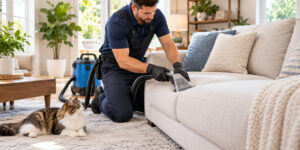
Can Professional Couch Cleaning Remove Cat Urine Smell?
Yes, professional couch cleaning can often remove or significantly reduce cat urine smell. The final result depends on how much urine reached
Pet accidents happen fast, but the smell can hang around much longer than most homeowners expect. In Phoenix, that problem can feel even more frustrating because heat, dry air, and seasonal humidity shifts can make old pet urine spots smell stronger all over again. What seemed handled a month ago can suddenly come back when temperatures rise or monsoon moisture moves in.
That is why pet odor and stain removal is not just about making carpet look better. It is about removing what is causing the smell, treating the area properly, and knowing when a simple surface cleanup is no longer enough. If you are dealing with a fresh accident, an old stain, or a room that still smells off even after cleaning, this guide will help you understand what to do next.
Phoenix homes deal with a mix of conditions that make pet-related stains and odors more stubborn. Carpet fibres can trap urine, dander, and oils. Dust from outside settles into the same areas. Then summer heat and monsoon humidity can make old residue more noticeable again.
That does not mean every stain is permanent. It does mean homeowners need a more careful approach. Pet odor removal is not just about the spot you can see. In many cases, the real issue is what has moved below the surface into the backing, padding, or nearby grout lines and upholstery.
The first few minutes matter. Fast action gives you the best chance of preventing a lingering stain or odor from setting in.
Use clean, dry towels or paper towels and press firmly into the affected area. The goal is to absorb as much moisture as possible before it spreads deeper into the carpet or padding.
Do not rub the spot. Rubbing can push the accident farther into the fibres and backing, which makes cleanup harder and can widen the stain.
After blotting, use a pet-safe enzyme-based cleaner designed for urine and organic messes. These products are made to break down the source of the odor rather than simply covering it up with fragrance.
Follow the label directions and avoid over-saturating the area. Too much liquid can make the problem worse by driving moisture deeper into the carpet or underlayment.
A lot of homeowners make the problem harder to solve by using the wrong method too early. Try to avoid these common mistakes:
A fresh accident can often be improved with a careful at-home response. But if the smell returns after drying, that is usually a sign the contamination went deeper than the surface.
Some pet stains are simple. Others are not. The challenge is that the visible spot is not always the full problem.
If the odor seems strongest on warm afternoons, if your pet keeps returning to the same location, or if the smell improves briefly and then comes back, there is a good chance the issue has moved past the top layer of carpet.
If the accident was heavy, repeated, or left untreated for too long, urine can soak through the carpet face fibres and into the padding below. That is when standard surface spot cleaning usually stops being enough.
You may notice a stronger smell when walking over the area, after the room has been closed up, or when indoor temperatures rise. Those are common signs that the deeper layers are still holding odor.
In more severe cases, contamination can reach the subfloor. This is more common when pets repeatedly use the same spot over time. At that stage, cleaning becomes a deeper restoration issue rather than a simple stain-removal issue.
That does not always mean replacement is necessary, but it does mean homeowners should have realistic expectations. The right treatment depends on how far the contamination has spread and what material is underneath.
Not every pet accident is easy to spot in daylight. Hidden stains can sit under furniture, near wall edges, or in low-traffic rooms where odors build gradually.
A handheld blacklight can help reveal older pet urine spots that are difficult to see normally. This can be especially useful if you are moving into a home, preparing a property for sale, or trying to figure out why one room still smells unpleasant.
Do not limit your inspection to the obvious carpet area. Pet accidents can affect:
A room can continue to smell even when the main carpet spot looks clean because nearby materials are still holding residue.
Homeowners often ask the same question: when is DIY enough, and when should you bring in a professional?
The answer depends on the age of the stain, how large the affected area is, and whether the smell keeps returning.
If the accident is fresh, small, and treated quickly, an at-home response may be enough to improve the issue. That is especially true if there is no lingering smell after the area dries completely.
Professional treatment is the better option when the issue is repeated, older, spread across multiple areas, or clearly deeper than the surface. That includes cases where the carpet smells clean for a day and then starts smelling again, or where the same room seems worse during hot weather.
This is where deeper extraction, targeted treatment, and realistic evaluation matter. Homeowners do not always need replacement, but they do need an honest assessment of what can be cleaned and what may need a more advanced solution.
Pet stains and odors do not affect every surface the same way. Carpet, upholstery, tile, and rugs all respond differently, which is why one-size-fits-all cleanup rarely works well.
Carpet is the most common trouble area because liquid can travel through the fibres and into the padding. Surface treatment may improve the appearance, but the source of the odor needs to be addressed for a better long-term result.
Pet accidents on sofas, chairs, and cushions can leave behind both odor and discoloration. Upholstery also holds dander, oils, and hair, which can compound the problem if it has not been professionally cleaned in a while.
Many Phoenix homeowners are surprised to find that pet accidents can affect grout lines too. Grout is porous, so repeated accidents around pet feeding zones, entryways, or room transitions can create odor issues that mopping alone does not solve.
A professional visit should begin with inspection, not guesswork. The goal is to identify where the problem is, how deep it goes, and what treatment makes the most sense for that specific situation.
In many cases, pet odor and stain removal includes targeted spot treatment, odour-focused cleaning agents, and extraction methods designed to remove as much contamination as possible rather than simply freshening the top layer. The right process depends on the surface, the severity, and how long the problem has been there.
For homeowners, the most important thing is ready-status clarity. You want to know whether the area is likely to respond to treatment, whether deeper contamination is suspected, and what the next best step is. A good service should leave you with a clearer home-care plan, not vague promises.
HydroCare Services provides professional cleaning support across the Phoenix metro for homeowners dealing with pet stains, lingering odours, and surface-specific messes. Our team handles carpet cleaning, upholstery cleaning, and tile & grout cleaning with a straightforward, service-first approach. We focus on what the surface needs, what the realistic outcome looks like, and what steps will best improve the space.
Because many pet-related issues affect more than one area, HydroCare can help homeowners address the problem as a whole instead of looking at one stain in isolation. If the concern extends beyond flooring, our broader cleaning services can also help improve the overall freshness of the home. For businesses, pet-related odours can also show up in pet-friendly offices, managed properties, waiting areas, and shared soft-surface spaces, so the same consultative approach matters there as well.
If you are dealing with a room that never quite smells clean, a stain that keeps resurfacing, or a move-out situation that needs professional attention, the next step is simple: request a free estimate through the HydroCare contact form and get clear guidance on what your home likely needs.
The best pet odor removal job is the one you do not need twice. Prevention does not eliminate accidents, but it can reduce how serious they become.
The faster you blot and treat an accident, the less likely it is to spread into deeper layers. Waiting too long gives moisture more time to settle below the surface.
Regular vacuuming helps reduce the buildup of pet hair, dander, and outdoor dust in carpet and upholstery. In Phoenix, that extra dust load can make soft surfaces feel dirtier faster.
Pet beds, blankets, and favourite resting spots hold oils and odours that can transfer back into carpet and upholstery. Frequent washing and grooming helps reduce that cycle.
Air filters and vacuum filters matter more in pet homes. They help control circulating dander and dust that can settle into fibres and affect overall freshness.
Most homeowners hope every pet odor issue can be solved with one surface treatment. Sometimes that is true. Sometimes it is not.
If the area has been repeatedly soiled over time, if the smell is deeply set, or if the source has moved into padding or subfloor materials, deeper corrective steps may be needed. That does not mean panic. It means getting a realistic evaluation before wasting time on repeated DIY attempts that do not address the source.
Pet odors and stains are frustrating, but they do not have to take over your home. In Phoenix, quick action, the right cleaning method, and a realistic understanding of how deep the issue goes can make a major difference.
If you want a clear next step instead of trial and error, HydroCare Services is ready to help. Use the form to request your free estimate and get practical guidance on the best path for your carpet, upholstery, tile, or whole-home freshness.
Heat and humidity changes can make old residue more noticeable again. Even when the surface looks clean, deeper contamination can still create recurring odor.
Some can be improved significantly, especially when treated properly. The outcome depends on the age of the stain, the carpet material, and whether the padding or subfloor is involved.
A pet-safe enzyme cleaner is usually the best first step for fresh accidents because it is designed to break down the source of the odor.
Call a professional when the smell keeps returning, the stain is older, the affected area is large, or the issue clearly goes deeper than the carpet surface.
Yes. Upholstery can trap odor and staining, and grout can absorb contamination in repeated accident areas.
When the right products and methods are used, treatment is typically designed with household safety in mind. It is still smart to follow any aftercare instructions given for drying and re-entry.
Yes, professional couch cleaning can often remove or significantly reduce cat urine smell. The final result depends on how much urine reached

Moving into a new home is exciting, but it is also one of the best opportunities to clean the property thoroughly. Empty

Travertine is a natural fit for many Phoenix homes. Its warm tones work well on indoor floors, patios, showers, walkways, and pool