
How Long Does a Sectional Couch Take to Dry After Cleaning?
A sectional couch can take anywhere from a few hours to 24 hours to dry after cleaning. In many cases, professionally cleaned
Living with pets in Arizona means your carpet handles more than ordinary foot traffic. Fine desert dust settles between the fibers, pet hair gathers in corners, and paws can carry in sand, soil, or monsoon mud.
Fine dust enters through doors, shoes, paws, and small gaps around entrances. Once foot traffic pushes it down, a quick vacuum pass may remove surface debris while leaving grit deeper in the pile.
Visible hair is only part of the problem. Dander and natural skin oils can cling to carpet fibers and help dust stick, especially in homes with multiple pets or animals that spend time outdoors.
Monsoon season can turn dry soil into sticky mud that pets track through entryways. Seasonal humidity may also make old odors more noticeable when residue remains in the carpet backing or pad.
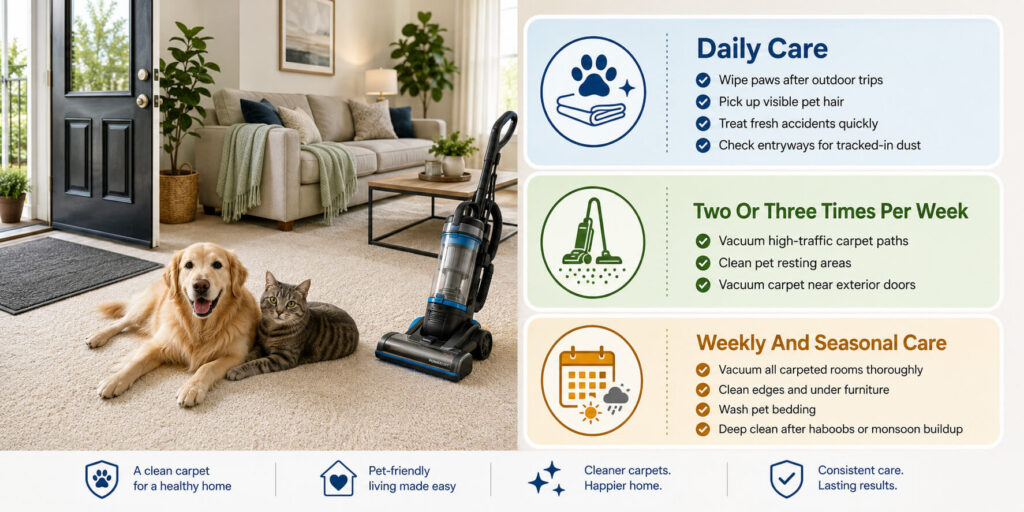
Regular care keeps loose dust and pet hair from becoming deeply embedded.
Wipe paws before pets enter carpeted areas, collect visible hair near beds and furniture, and respond to fresh accidents immediately. Check entryways so loose grit does not spread through the home.
Vacuum high-traffic paths, pet resting zones, and carpet near exterior doors. Homes with large dogs, long-haired cats, or several pets may need daily attention in these areas.
Vacuum all carpeted rooms weekly, including edges, corners, and accessible spaces beneath furniture. Wash pet bedding and clean vacuum filters, brushes, and collection bins.
After a haboob or heavy monsoon traffic, clean entrances and pet routes more carefully. Carpet that still feels gritty after repeated vacuuming may need deeper extraction.
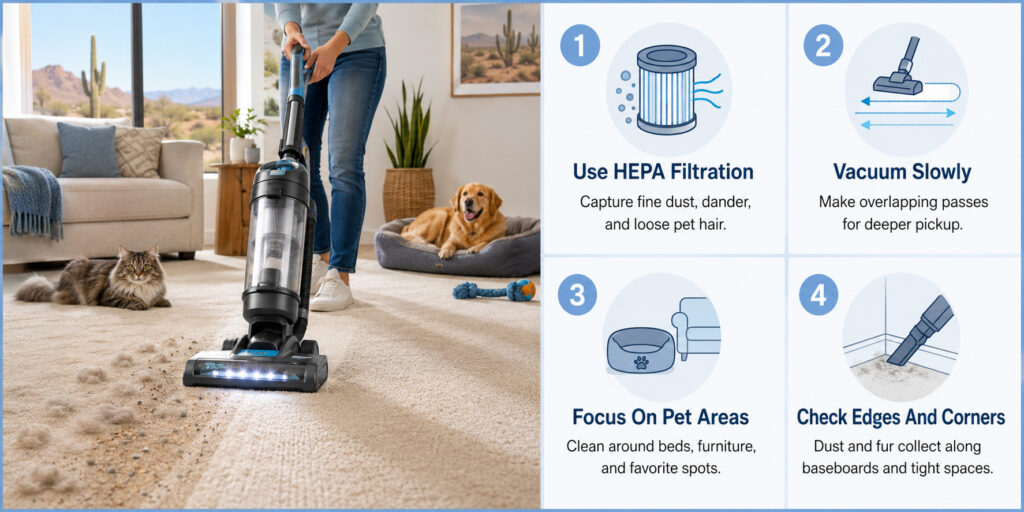
Moving too quickly can leave fine dust and tangled hair behind.
A well-sealed vacuum with effective filtration helps capture fine particles instead of sending them back into the room. HEPA filtration can be useful in homes dealing with pet dander and Arizona dust.
Follow the manufacturer’s directions for filter care. A clogged filter or overfilled collection bin reduces suction.
Move slowly enough for the brush roll and suction to work through the pile. Overlap each pass slightly, then change direction where pet hair is concentrated.
This method is especially useful in hallways, traffic lanes, living rooms, and around pet beds.
Rubber tools, upholstery attachments, and carpet rakes can loosen hair the vacuum leaves behind. Aggressive tools may pull loops or disturb delicate fibers, so test a hidden area first.
A few entry habits can reduce dust and outdoor soil before they reach the carpet.
Place a durable mat outside each frequently used entrance and a washable runner inside. Clean both regularly because a mat filled with grit can become another source of tracked-in dirt.
Keep towels or pet-safe wipes near the door used for walks and yard access. Wipe each paw, including between the pads where dust and mud collect.
Brushing pets outdoors can also reduce loose hair and dander, particularly during seasonal shedding.
Close windows and limit door traffic during haboobs. Check door sweeps and weather stripping if dust regularly gathers near entrances.
HVAC filters and portable air cleaners may help manage airborne particles, but filters should be compatible with the system. Follow the equipment manufacturer’s airflow recommendations.
After the storm passes, keep doors and windows closed while dust settles and wipe pets before they enter carpeted rooms.
Vacuum slowly in more than one direction. Pay attention to entryways, carpet edges, beneath lightweight furniture, and around pet beds where fine dust gathers unnoticed.
Wash exposed pet bedding and damp-dust hard surfaces after loose debris is removed. If the carpet remains gritty or releases dust, professional carpet cleaning in Phoenix can address buildup routine vacuuming may not reach.
Act quickly because the surface may look dry while moisture is still moving into the backing or pad.
Lift solid material carefully without pressing it deeper into the carpet. For liquid accidents, use clean white towels and firm pressure.
Continue blotting with dry sections until very little moisture transfers. Do not scrub because it can spread the spot and roughen the fibers.
An enzyme-based cleaner can break down organic residue instead of covering the smell with fragrance. Choose a product intended for the carpet and type of accident.
Test a hidden area, then follow the label directions for application and contact time. Avoid soaking the carpet because excess liquid can carry contamination deeper.
Use a clean absorbent towel to draw out remaining moisture when the product directions allow it. Improve indoor airflow and keep pets away until the area is fully dry.
Odor that returns after drying may indicate contamination below the surface.
Carpet can look clean while odor remains in the backing, pad, or flooring below. As the room warms or seasonal humidity rises, hidden residue may become noticeable again.
Too much cleaner can leave sticky residue that attracts dirt, while over-wetting may spread contamination. These tips for safe pet odor removal explain why gentle treatment and moisture control matter.
Repeated accidents usually need more than deodorizing spray. A focused pet odor and stain removal approach can help determine whether the issue is limited to the fibers or has reached deeper materials.
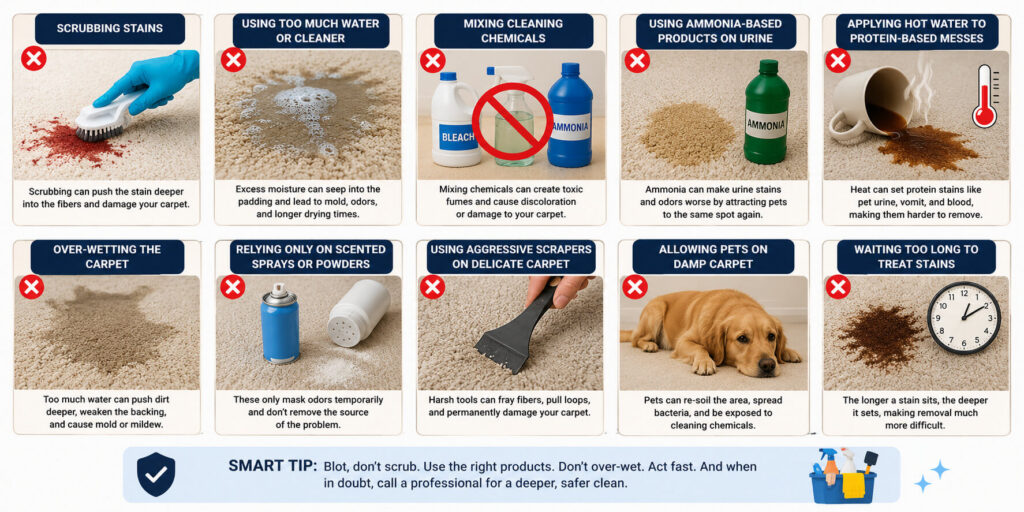
Avoid these common mistakes:
Test new products and tools in a hidden area because carpet materials can respond differently.
Many Arizona homes with pets benefit from professional carpet cleaning every 6 to 12 months. Homes with several pets, frequent accidents, heavy shedding, children, or high traffic may need service sooner.
Dark traffic lanes, recurring odor, gritty texture, and returning spots suggest routine maintenance is no longer enough.
Pricing varies with room size, soil level, stain treatment, and pet-related conditions. Understanding common carpet cleaning costs in Phoenix can help homeowners compare estimates and confirm what is included.
HydroCare Services provides carpet cleaning across Phoenix and surrounding communities for homes dealing with desert dust, pet hair, traffic buildup, stains, and lingering odors. The service is built around careful inspection, clear recommendations, dependable scheduling, and treatment based on the carpet’s actual condition rather than one solution for every home.
Vacuum pet resting areas and high-traffic zones daily or several times per week, then clean the full carpeted area at least weekly.
Look for strong suction, effective filtration, a sealed design, useful pet attachments, and settings suitable for your carpet type.
A rubber glove, rubber squeegee, upholstery attachment, or carpet rake may help, but test the tool first on looped or delicate carpet.
It can improve many odor problems, but urine that reached the pad or subfloor may require additional treatment.
Many are designed for pet households, but follow the label, ventilate the room, and keep pets away until the carpet is dry.
Both timings can help. Pre-monsoon cleaning starts with a fresher surface, while post-monsoon cleaning removes seasonal dust and mud.
Fine soil may be packed below the surface or the vacuum may not be reaching deeply enough. Persistent grit often calls for extraction.
The source may remain in the backing or pad, excess moisture may have spread it, or humidity may be making old residue noticeable.
A sectional couch can take anywhere from a few hours to 24 hours to dry after cleaning. In many cases, professionally cleaned

Professional upholstery cleaning in Phoenix, AZ typically costs around $100 to $300 for a standard service, although the final price depends on
Yes, professional couch cleaning can often remove or significantly reduce cat urine smell. The final result depends on how much urine reached