
Can Professional Couch Cleaning Remove Cat Urine Smell?
Yes, professional couch cleaning can often remove or significantly reduce cat urine smell. The final result depends on how much urine reached
Yes, professional couch cleaning can often remove or significantly reduce cat urine smell. The final result depends on how much urine reached the upholstery, how long it has been there, and whether it soaked into the cushion foam or other internal materials.
A fresh accident that stays near the surface is usually easier to treat than repeated cat urine that has penetrated deep into a cushion. This is why simply spraying deodorizer over the affected area may make the couch smell better temporarily without actually solving the source of the odor.
Cat urine can be particularly difficult to remove because a couch is made from several layers of absorbent material. What looks like a small stain on the fabric may extend much farther beneath the visible surface.
The outer upholstery is only the first layer. Underneath it may be batting, padding, cushion foam, and structural material that can absorb moisture before you realize how far the accident has spread.
When urine reaches a couch cushion, gravity and pressure can draw the liquid through the upholstery and into the material underneath. Cushion foam is especially absorbent and can hold urine residue long after the outer fabric appears dry.
Repeated accidents in the same location can cause the contamination to travel deeper. Once urine reaches the inner foam or couch structure, cleaning only the upholstery surface may not be enough.
Many household products are designed to make an area smell fresher, but fragrance does not necessarily remove the source of a pet odor. The couch may seem fine immediately after cleaning, only for the smell to return after the fabric dries.
That is also why professional pet odor and stain removal focuses on understanding the affected surface and how deeply the contamination may have traveled rather than treating every pet accident the same way.
Professional couch cleaning can be very effective when the urine is limited to the upholstery or upper portion of a cushion. Results are often better when the accident is recent and has not repeatedly affected the same area.
Older accidents can still be treated, but they may require more attention. The condition of the upholstery, cushion construction, fabric type, amount of urine, and previous cleaning attempts can all affect the outcome.
Professional treatment is generally most successful when:
Deep or repeated urine contamination is more difficult. A reputable upholstery cleaner should inspect the condition before promising that every trace of odor can be completely eliminated.
Professional cleaning starts by determining what material is being treated and where the odor appears to be coming from. Upholstery cannot be approached exactly like carpet because furniture fabrics, cushion fillings, and construction methods vary widely.
The objective is to address the contaminated area as thoroughly as the material allows while avoiding unnecessary over-wetting or damage.
The first step is evaluating the fabric, cushions, seams, stains, and odor level. A small visible mark does not always show the full size of the affected area.
Understanding the upholstery type also helps determine which cleaning method and products can be used safely. HydroCare’s professional upholstery cleaning in Phoenix is matched to the fabric type and condition rather than using one identical process on every piece of furniture.
Pet urine needs more than a scented spray. Appropriate treatment is intended to address the contamination that is contributing to the odor rather than simply covering it with another fragrance.
The exact approach can vary based on the fabric and severity of the accident. Older or heavier contamination may need more focused treatment than a recent surface accident.
After treatment, professional cleaning can help remove loosened soil, residues, stains, and contamination from the upholstery. Extraction may also help remove moisture and cleaning solution when appropriate for the particular fabric.
The important distinction is that the process goes beyond wiping the visible surface. The cleaner is working with the actual condition of the furniture and the depth of the problem.
A couch should be allowed to dry completely before the final result is judged. Damp upholstery can smell different from fully dried fabric, particularly when there was already an odor problem.
Good airflow, normal indoor climate control, and fans where appropriate can help speed drying. Cushions should not be covered or heavily used until they are dry.
Yes. Cat urine can soak through upholstery and into cushion foam, especially when a larger accident is left untreated or the cat repeatedly urinates in the same location.
This is one of the main reasons some couches continue to smell even after the visible fabric has been cleaned. The upholstery may look clean while contaminated foam remains underneath.
If urine has penetrated deeply into a removable cushion, the cushion may require more extensive treatment. In severe cases where foam has been repeatedly saturated, replacing the cushion insert can sometimes be more practical than repeatedly cleaning it.
How quickly the accident is addressed can make a major difference. Fresh urine has had less time to migrate through the upholstery and dry inside the cushion.
Older contamination becomes more difficult because residue can remain deep within absorbent materials.
| Condition | Typical Cleaning Difficulty |
|---|---|
| Fresh surface accident | Lower |
| Dried urine spot | Moderate |
| Urine inside cushion foam | Higher |
| Repeated accidents in one area | High |
| Contamination reaching internal structure | May require additional treatment or replacement |
Even with older stains, professional cleaning may still provide significant improvement. The important part is setting realistic expectations based on how deeply the urine has traveled.
If the odor returns after cleaning, the most common reason is that some of the contamination remains beneath the surface. Cleaning the upholstery cover without treating affected padding or foam may improve the smell temporarily without reaching the source.
Other possible reasons include repeated accidents, incomplete drying, excessive DIY cleaning solution, contamination around seams, or another nearby surface holding the same odor.
This same issue can happen with flooring. When pet urine reaches below the visible carpet fibers, professional pet odor removal from carpet may require attention to more than the area you can see from above.
Using very hot steam as an immediate DIY response is generally not the best approach for cat urine. Heat can make urine-related stains and odors more difficult to address, and excessive moisture may push contamination farther into absorbent furniture materials.
Professional upholstery cleaning is different because the method should be selected according to the fabric, construction, and problem being treated. Not every couch should receive the same amount of heat, moisture, or cleaning solution.
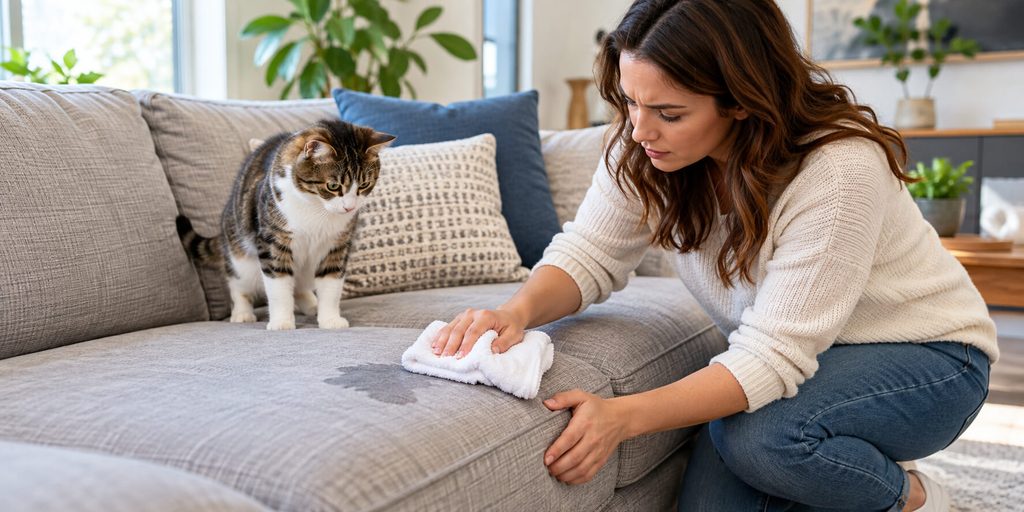
Acting quickly can reduce how deeply the urine penetrates. Start by blotting the area with clean, absorbent towels instead of rubbing it into the upholstery.
Avoid pouring large amounts of household cleaner onto the cushion. Excess liquid can drive the contamination deeper into the foam and create a much larger wet area.
Check the furniture’s care instructions before applying a cleaner. If you use a pet urine treatment yourself, make sure it is suitable for that upholstery material and test it in an inconspicuous area first.
If the odor remains after the area has completely dried, professional cleaning is usually the safer next step.
DIY cleaning can work for very small, fresh accidents, but some situations deserve professional attention.
Consider professional cleaning when the odor returns after cleaning, the urine reached the cushion foam, the accident is old, several areas are affected, or your cat has repeatedly used the same spot.
Professional help is also worth considering for delicate or valuable furniture where experimenting with different household products could cause discoloration, water marks, residue, or fabric damage.
Professional cleaning can provide excellent results, but no cleaning method can guarantee that every severely contaminated couch will be completely restored.
Urine that has repeatedly saturated thick foam, batting, springs, wood, or other internal materials can be extremely difficult to remove without accessing or replacing those components.
This does not necessarily mean the entire couch needs replacing. Sometimes a removable cushion insert is the main source of the odor and replacing that material is more practical than replacing the furniture.
HydroCare Services provides professional sofa and upholstery cleaning for Phoenix homes dealing with pet odors, pet stains, spills, everyday buildup, and heavily used furniture. Our approach begins with the condition and fabric of the furniture so the cleaning method can be matched to the piece instead of treating every couch the same way.
From standard couches and loveseats to sectionals, recliners, cushions, and upholstered chairs, our sofa cleaning in Phoenix can help refresh furniture that no longer looks or smells as clean as it should. For cat urine concerns, the sooner the affected area is evaluated, the better the opportunity to address the contamination before it penetrates farther into absorbent materials.
Yes. Cat urine smell can often be removed or significantly reduced, particularly when the contamination has not repeatedly saturated the cushion foam or internal furniture materials.
Professional upholstery cleaning can often achieve better results than surface-only DIY cleaning because the cleaner can evaluate the upholstery, contamination level, cushion condition, and most appropriate cleaning method.
The source of the odor needs to be treated rather than simply covered with fragrance. Urine-specific cleaning products and professional treatment can help address residue that remains in upholstery and cushions.
Blot fresh urine without rubbing, avoid soaking the cushion, check the upholstery cleaning instructions, and use only products suitable for the fabric. If the smell remains after drying, consider professional treatment.
Yes. Cushion foam is absorbent, so urine can travel through the outer fabric and remain inside the cushion. Deep foam contamination is usually more difficult to treat than a surface accident.
Urine may still be present in the foam, batting, seams, or other materials beneath the upholstery. The visible surface can appear clean even while odor-causing contamination remains underneath.
Professional cleaning can often significantly improve older urine odors, but results depend on how long the contamination has been present and how deeply it has penetrated the furniture.
Not always. Some contaminated cushions can be professionally treated, but heavily or repeatedly saturated foam may be better replaced if the urine has penetrated throughout the insert.
Yes, professional couch cleaning can often remove or significantly reduce cat urine smell. The final result depends on how much urine reached

Moving into a new home is exciting, but it is also one of the best opportunities to clean the property thoroughly. Empty

Travertine is a natural fit for many Phoenix homes. Its warm tones work well on indoor floors, patios, showers, walkways, and pool