
How Long Does a Sectional Couch Take to Dry After Cleaning?
A sectional couch can take anywhere from a few hours to 24 hours to dry after cleaning. In many cases, professionally cleaned
Travertine is a natural fit for many Phoenix homes. Its warm tones work well on indoor floors, patios, showers, walkways, and pool decks, especially in desert-style spaces.
But travertine is porous. Dust, spills, pool water, minerals, grease, and everyday traffic can work into the stone if it is left unprotected. For many Phoenix homes, travertine sealing is worth it, especially in areas exposed to moisture, stains, heavy foot traffic, or outdoor conditions.
The key is using the right sealer and preparing the stone correctly. Sealing protects travertine without making it maintenance-free.
Travertine is a form of limestone with natural pores and small voids. Those features create its distinctive texture, but they also make it more absorbent than many manufactured tile surfaces.
Phoenix adds a specific mix of challenges. Desert dust settles into textured stone, pool decks face repeated water exposure, and indoor surfaces collect spills and hard water residue.
A suitable penetrating sealer helps reduce how quickly those materials soak into the stone. It can also make routine cleaning easier and give homeowners more time to wipe up spills.
A good sealer does not make travertine waterproof. Instead, an appropriate penetrating or impregnating sealer enters the stone’s pores and reduces absorption while allowing the surface to keep a more natural appearance.
That protection is especially useful in high-use areas.
Unsealed travertine can absorb oils, drinks, food spills, soil, and other contaminants. Once a stain moves into the stone, normal surface cleaning may not remove it completely.
Sealing slows that absorption. It does not replace quick cleanup, but it gives the stone added resistance.
Arizona dust can settle into the texture of travertine and around grout joints. When the stone is properly sealed and maintained, dirt is less likely to penetrate as deeply.
If your floors already look dull from embedded soil, professional tile and grout cleaning in Phoenix can help reset the surface before sealing is considered.
Kitchens, showers, patios, and pool decks are more likely to benefit from sealing because they regularly contact water, food, body products, or outdoor debris.
Hard water is another concern. Travertine should not be cleaned with acidic products such as vinegar because they can etch calcium-based natural stone. Our guide to removing hard water stains from shower tile explains why natural stone needs a different cleaning approach.
For many homeowners, the pool deck is where travertine sealing makes the strongest case. Outdoor stone is exposed to water, sunscreen, food, dust, landscaping debris, and frequent foot traffic.
A breathable penetrating sealer can help reduce staining and moisture absorption without covering the stone in a heavy film. Some topical products can change the appearance or make a wet pool deck more slippery.
Pool areas should be evaluated for traction before a sealing system is selected. The goal is protection without losing the texture that makes travertine appealing around pools.
Arizona heat does not prevent travertine from being sealed, but outdoor products must be compatible with natural stone and the conditions where they will be used.
Low-quality or incompatible products may haze, peel, discolor, or wear unevenly. Applying too much sealer or sealing stone while it is still damp can also create cloudy or blotchy results.
The surface should be clean, dry, and free of trapped stains or residue before sealing. Sealing over grease, mineral deposits, or old cleaning residue can lock the problem in instead of solving it.
Travertine can also be etched by acidic cleaners that may be safe for ceramic or porcelain. HydroCare’s complete tile and grout cleaning guide for Arizona homes explains why natural stone requires more careful product selection. If dark grout is part of the problem, how professionals clean grout explains why soil can remain below the surface even after routine mopping.
There is no universal schedule. Outdoor stone may need attention sooner because of sun, water, traffic, and exposure, while protected indoor flooring may go longer between applications.
Instead of resealing automatically every year, watch how the stone behaves. If water quickly darkens the surface instead of remaining on top, or the stone becomes harder to keep clean, the existing protection may be wearing down.
A professional inspection can help determine whether the surface needs cleaning, resealing, restoration, or simply better maintenance.
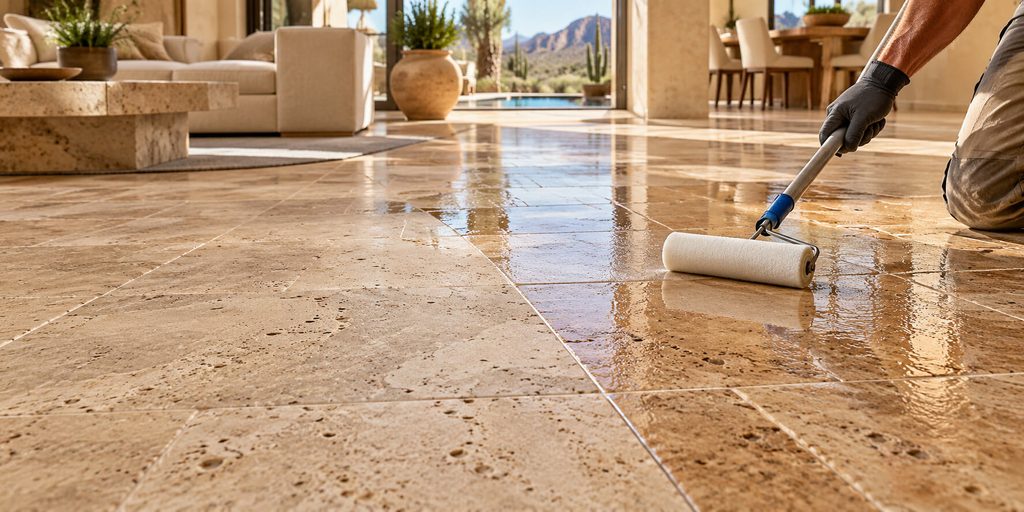
For many residential surfaces, a penetrating or impregnating sealer made for natural stone is the preferred approach. These products work within the pores instead of building a thick coating on top.
Some homeowners choose color-enhancing sealers that deepen the stone’s tones. Because they change the appearance, test them in a small area first.
Pool decks require extra caution. Slip resistance, breathability, finish, and exposure conditions should all be considered.
For stain-prone or heavily used areas, sealing is often easier to justify than waiting for deep staining or surface problems to develop. Its value comes from reducing absorption, simplifying maintenance, and helping protect a material that can be costly to restore.
Travertine sealing costs in Phoenix vary based on square footage, surface condition, cleaning requirements, previous coatings, access, and sealer type. A clean surface will usually be less involved than stone that first needs stain removal, stripping, filling, honing, or polishing.
Compare the full scope of work, not only the lowest price.
Sealing is protection, not repair. If travertine is already etched, deeply stained, cracked, uneven, or covered with a failing old coating, another layer of sealer may not correct the problem.
The stone may first need cleaning or restoration. Sealing will not make damaged grout look new either. HydroCare’s grout sealing and color sealing in Phoenix explains the difference between cleaning, standard sealing, and color sealing for grout.
Evaluate the surface first so the right service comes before sealing.
HydroCare Services helps Phoenix-area homeowners care for tile, grout, and natural stone with a material-specific approach. The condition, finish, staining, traffic, and location of the surface are considered before deciding what kind of cleaning or protection makes sense. That matters because an indoor travertine floor, natural stone shower, and outdoor pool deck can have very different maintenance needs. Proper cleaning and appropriate protection can help preserve the stone without relying on harsh chemicals or one-size-fits-all treatments.
Travertine sealing is worth considering in Phoenix when the stone is exposed to stains, moisture, heavy traffic, or outdoor conditions. The best results come from treating the surface as natural stone, not ordinary tile.
Start with a clean, properly prepared surface, choose a sealer designed for travertine, and avoid harsh chemicals or coatings that do not match the location. With the right maintenance plan, travertine can continue to fit Phoenix homes beautifully for
Yes, sealing is generally recommended when travertine is exposed to spills, moisture, pool water, food, oils, or heavy traffic. The right penetrating sealer helps reduce absorption while preserving the natural look of the stone.
No. Travertine still works well in Arizona because its warm, natural colors complement desert, Southwestern, Mediterranean, and contemporary design. Honed, tumbled, matte, and lighter finishes can feel especially current.
Pricing depends on square footage, condition, cleaning needs, previous coatings, and sealer type. A basic clean-and-seal project is less involved than stone that needs stripping, stain removal, repair, honing, or polishing.
Travertine is porous, can stain, and is sensitive to acidic cleaners. It can also require periodic sealing and more careful maintenance than porcelain or ceramic tile.
A sectional couch can take anywhere from a few hours to 24 hours to dry after cleaning. In many cases, professionally cleaned

Professional upholstery cleaning in Phoenix, AZ typically costs around $100 to $300 for a standard service, although the final price depends on

Yes, professional couch cleaning can often remove or significantly reduce cat urine smell. The final result depends on how much urine reached