
How Long Does a Sectional Couch Take to Dry After Cleaning?
A sectional couch can take anywhere from a few hours to 24 hours to dry after cleaning. In many cases, professionally cleaned
A mattress can look clean on the surface and still hold far more buildup than most homeowners realize. Sheets and pillowcases usually get washed often, but the mattress underneath is easy to ignore for months at a time. Over time, that can leave you dealing with trapped dust, body oils, stale odors, and stains that are harder to remove than they should be.
In Arizona, the issue is a little different than it is in cooler or more humid parts of the country. Phoenix-area homes deal with fine desert dust, hotter nights, and seasonal humidity shifts during monsoon season. That combination can make mattress hygiene feel simple one month and frustrating the next.
The good news is that keeping a mattress cleaner does not require a complicated routine. It comes down to consistent upkeep, careful spot cleaning, moisture control, and knowing when a mattress needs more than a quick refresh.
Arizona’s dry climate can make homeowners assume indoor fabrics stay cleaner for longer. In some ways that is true, but mattresses still deal with daily buildup that settles in gradually and becomes noticeable once odors, stains, or a stale feel start showing up.
Bedrooms in Phoenix also collect more dust than many people expect. Fine particles come in from shoes, open doors, windows, pets, clothing, and HVAC airflow. Once that dust lands on bedding and soft surfaces, it does not just disappear.
Dust is one of the biggest reasons mattresses stop feeling fresh. Even when you keep the room tidy, fine particles settle into bedding, seams, and the outer fabric of the mattress over time. If you have ever noticed more dust around baseboards, vents, or fabric furniture, the same pattern is usually happening in the bedroom.
That is one reason a clean sleep setup is not only about washing sheets. The mattress itself needs attention too. If dust is a constant issue in your home, this guide on keeping desert dust out of your Phoenix home is worth reading alongside your regular cleaning routine.
Even with air conditioning, Arizona nights can still mean more sweating during sleep than many homeowners realize. Sweat and body oils slowly work their way into sheets, protectors, and the mattress surface. On top of that, skin cells, pet dander, and everyday use can create odors and leave the mattress feeling less fresh over time.
This does not mean every mattress needs aggressive treatment. It means regular care matters more than waiting until the problem becomes obvious.
Most of the year, Arizona feels dry enough that people do not think much about moisture. Then monsoon season arrives and indoor conditions can shift quickly. Bedrooms that feel comfortable the rest of the year may suddenly hold a little more humidity, especially if airflow is limited or the mattress has already absorbed sweat or past spills.
That added moisture does not mean panic, but it does mean drying matters. If a mattress gets wet from cleaning or stains, it needs time and airflow to dry completely before the bed is remade.
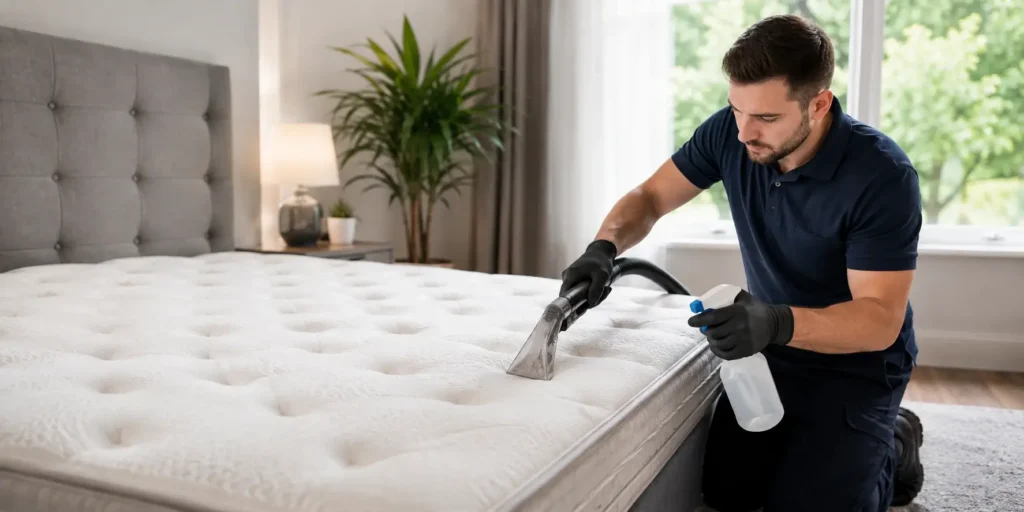
Cleaning a mattress the right way is mostly about doing enough without doing too much. Many people damage mattresses by over-wetting them, scrubbing too hard, or using strong products that leave behind residue.
A better approach is simple, careful, and consistent.
Start by removing everything from the mattress. Sheets, pillowcases, mattress protectors, and toppers should all come off before you begin. Wash those items first so the bed goes back together with clean layers once the mattress is ready.
Hot sleepers, pet owners, and homes with children usually benefit from washing protectors more often than they think. A clean protector helps reduce the amount of sweat, oils, and spills that reach the mattress itself.
Use a vacuum with an upholstery attachment and work slowly across the entire surface. Pay extra attention to seams, edges, corners, and any quilted areas where dust and debris can settle.
Vacuuming does more than remove visible dirt. It helps lift dust, hair, and fine particles that sit just below the surface fabric. That makes the mattress feel fresher before you even move on to spot cleaning or deodorizing.
If you are dealing with stains, the goal is to treat the affected area without soaking the mattress. Use a cloth to blot rather than rub. Rubbing pushes the stain deeper and can spread it farther across the fabric.
A small amount of cleaner on a cloth is usually better than spraying product directly onto the mattress. Work gently and stay controlled. Memory foam and pillow-top styles in particular do not respond well to heavy moisture.
For light odor control, baking soda is one of the most common at-home options. Sprinkle a light, even layer over the mattress, let it sit for a while, then vacuum it thoroughly. This can help absorb surface odors without adding moisture.
What you want to avoid is turning deodorizing into a wet cleaning session. Too much liquid creates a drying problem, and that often causes more trouble than the original odor.
This step matters just as much as the cleaning itself. Once spot treatment is done, let the mattress dry completely before you remake the bed. Open the room up to airflow, run fans if needed, and give the surface enough time.
A mattress that feels slightly damp should not be covered back up with sheets and protectors. Trapped moisture can leave the bed feeling stale and make odors linger longer than they should.
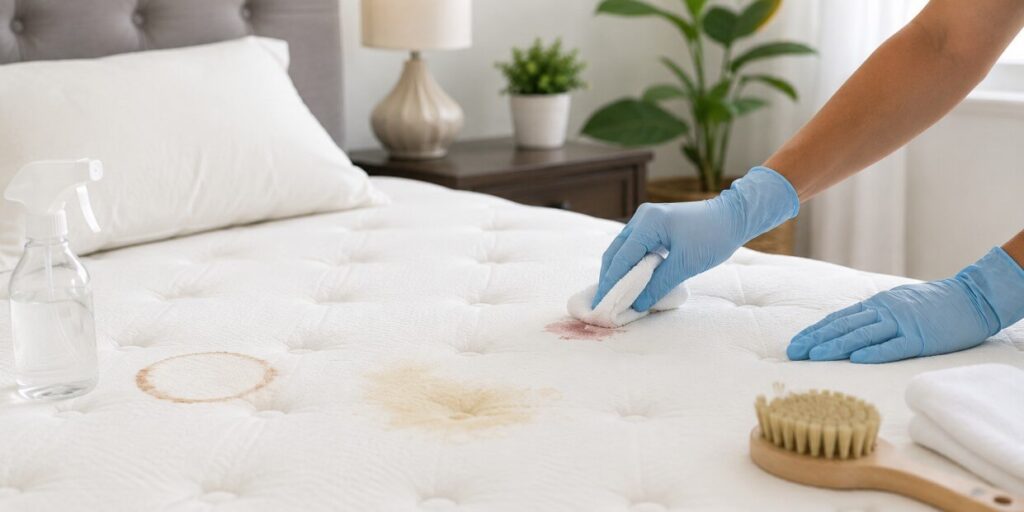
Not every stain behaves the same way, so it helps to be a little more specific instead of treating everything with one product and one method.
Sweat stains often show up gradually as yellowing or darker patches. These are common in Arizona homes, especially during warmer months. Light spot treatment and regular protector use can help keep them from becoming permanent.
If the mattress has ongoing odor along with visible sweat staining, the issue is usually buildup over time rather than a one-time accident.
Urine needs quick attention. Blot first, avoid oversaturating the mattress, and use a cleaner suited to breaking down odor-causing residue. The biggest mistake here is using too much liquid and pushing the moisture deeper into the mattress core.
Blood stains usually respond best when treated early. Gentle blotting and careful stain treatment work better than scrubbing. As with other stains, the main goal is controlling moisture while lifting as much of the spot as possible.
Pet accidents can be the trickiest because they often combine staining and lingering odor. If the odor stays even after surface cleaning, it may mean the accident reached deeper than the outer fabric. At that point, repeated DIY cleaning can sometimes make the problem worse if too much moisture gets used.
A cleaner mattress usually comes from restraint, not force. Many common mistakes happen when homeowners try to speed up the process or use stronger products than the material really needs.
A few things to avoid:
These mistakes can leave behind residue, spread stains, or create drying issues that are harder to fix later.
For most Arizona homes, light mattress care should happen regularly instead of waiting for visible buildup. Vacuuming the mattress every time you change bedding is a good habit, even if you only do a quick pass. Washing sheets weekly and washing protectors on a consistent schedule also helps reduce how much reaches the mattress surface.
A deeper mattress cleaning is usually worth doing every six to twelve months, depending on the household. Homes with pets, children, hot sleepers, or frequent spills may need more attention than homes with lighter use.
Rotating the mattress on a regular schedule can also help distribute wear more evenly and keep certain areas from aging faster than others.
Prevention does more for mattress hygiene than most cleaning products ever will. A quality protector gives you a barrier between the sleeper and the mattress, which helps with sweat, oils, spills, and general wear.
That barrier matters even more in Arizona homes where dust can settle quickly and hot nights can increase moisture on the bed surface. If you do not already use a protector, it is one of the easiest improvements you can make.
It also helps to keep the rest of the room cleaner. Dust on carpets, upholstered furniture, and vents does not stay in one place. It moves through the room and settles on soft surfaces over time. That is why homeowners often see better overall results when they think about the bedroom as a whole instead of focusing only on the mattress.
Sometimes the signs are obvious. A spill, a stain, or a strong odor tells you right away that it is time to clean. Other times, the signs are more gradual and easier to ignore.
Watch for things like a stale smell after fresh sheets go on, visible discoloration, more dust around seams, or a mattress that never quite feels fresh anymore. These are often signs that regular upkeep has been skipped for too long.
If your bedroom also feels dusty overall, cleaning the mattress alone may not solve the full problem. Sometimes a fresher room starts with tackling the other soft surfaces and airflow sources around it.
HydroCare Services works with Phoenix-area homeowners who want cleaner, fresher indoor spaces without the fluff. While the company’s core services focus on carpets, upholstery, tile and grout, air ducts, dryer vents, and water damage cleanup, the same idea applies here too: cleaner surfaces and better maintenance routines usually lead to a home that feels more comfortable day to day.
If dust and buildup are showing up across the bedroom, not just on the bed itself, professional upholstery cleaning in Phoenix can help refresh chairs, benches, and other fabric pieces nearby. If airflow and dust are a constant issue, air duct cleaning in Phoenix may also be part of the bigger picture. Homes with fabric headboards, seating, or bedroom sofas can also benefit from the kind of deeper care outlined in this look at why upholstery gets dirtier faster in Scottsdale, since many of the same dust and daily-use issues apply across the Phoenix metro.
Mattress hygiene is easy to put off because the surface is usually covered and the signs build slowly. But in Arizona homes, dust, sweat, heat, and seasonal humidity shifts can make mattresses feel less fresh faster than people expect.
The best routine is not complicated. Wash bedding regularly, use a protector, vacuum the mattress, handle stains carefully, and avoid over-wetting the material. Those simple habits go a long way toward keeping the bed cleaner and extending the life of the mattress.
And if the whole room feels like it is holding onto dust and stale air, it may be time to look beyond the bed and improve the surrounding space too.
Light upkeep should happen regularly, including vacuuming and washing bedding on a consistent schedule. A deeper cleaning every six to twelve months is a smart target for many homes.
Start by stripping the bed, vacuuming thoroughly, spot cleaning carefully, deodorizing lightly if needed, and letting the mattress dry fully before putting bedding back on.
Yes, baking soda is commonly used to help with light deodorizing. It should be vacuumed off thoroughly after sitting for a while, and it should not replace proper stain treatment if there is a deeper issue.
Regular vacuuming, protectors, bedding changes, and light deodorizing can help. If odor is heavy or long-standing, it may point to deeper buildup that simple surface cleaning will not fully fix.
Yes. A good protector helps reduce how much sweat, dust, oils, and spills reach the mattress itself, which makes ongoing care much easier.
Yes, seasonal humidity can make trapped moisture more noticeable, especially if the mattress has absorbed sweat or past spills. That is why full drying after cleaning matters so much.
It depends on how much moisture was used, but the mattress should feel fully dry before sheets and protectors go back on. Fans and airflow can help speed that up.
If the mattress has deep-set odors, major staining, age-related wear, or ongoing comfort problems, replacement may make more sense than repeated cleaning.
A sectional couch can take anywhere from a few hours to 24 hours to dry after cleaning. In many cases, professionally cleaned

Professional upholstery cleaning in Phoenix, AZ typically costs around $100 to $300 for a standard service, although the final price depends on

Yes, professional couch cleaning can often remove or significantly reduce cat urine smell. The final result depends on how much urine reached