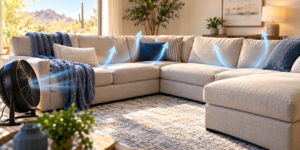
How Long Does a Sectional Couch Take to Dry After Cleaning?
A sectional couch can take anywhere from a few hours to 24 hours to dry after cleaning. In many cases, professionally cleaned
LVP and laminate both give Phoenix homeowners a wood look without the upkeep of traditional hardwood, but they perform differently around heat, sunlight, pets, spills, and concrete slab foundations.
For most Phoenix homes, quality rigid-core LVP is the more versatile choice because it handles moisture well and works in more rooms. Laminate can still be the better fit when scratch resistance, realistic wood texture, and value matter most.
The right choice depends on how the room is used, the surface underneath, and the kind of wear your household creates.
| Factor | LVP | Laminate |
|---|---|---|
| Water Protection | Excellent | Varies by product |
| Scratch Resistance | Good to excellent | Often better |
| Phoenix Climate | Strong choice | Strong with proper installation |
| Pets | Excellent overall | Excellent for claw resistance |
| Concrete Slabs | Well suited | Requires proper prep |
| Wet Areas | Strong choice | Only if product is approved |
| Wood Realism | Very good | Often excellent |
| Budget | Moderate | Often affordable |
Both use a decorative layer to imitate wood, but their core construction is different. That affects how each floor responds to water, impact, and daily wear.
Luxury vinyl plank usually combines a protective wear layer, printed design layer, and vinyl-based core. Rigid-core products commonly use SPC or WPC. SPC is dense and firm, while WPC generally feels softer underfoot.
Laminate typically uses a high-density fiberboard core beneath a wood-look layer and protective surface coating. Its hard top layer is one reason quality laminate often resists scratching well.
Newer waterproof laminate systems offer better moisture protection than older products, so compare actual specifications instead of assuming every laminate performs the same way.
Phoenix homes deal with intense outdoor heat, strong sunlight, desert dust, low humidity, monsoon moisture, and frequent indoor-outdoor traffic.
Air-conditioned interiors protect both materials from extreme outdoor temperatures. Direct sunlight through large windows can be a bigger issue because it can heat sections of flooring for hours. Proper expansion space and following installation requirements matter for both materials.
Many Phoenix homes are built on concrete slabs, so the slab should be checked before new flooring goes down. A quality plank will not correct a floor that is uneven or poorly prepared.
Concrete should be evaluated for flatness, cracks, moisture, adhesive, and high or low spots. Underlayment or moisture protection may also be required.
Rigid-core LVP is popular over concrete because of its stability and moisture resistance. Laminate can also work well when the slab is properly prepared.
If you are planning a larger replacement project, our flooring installation cost in Phoenix guide explains how preparation, removal, materials, and labor affect the final price.
LVP has the overall advantage when moisture exposure is a concern. It is practical for kitchens, laundry areas, entryways, and homes with pets.
Traditional laminate can swell if water reaches the fiberboard core, but newer waterproof systems protect seams and surfaces more effectively. The manufacturer’s room approval and warranty still matter.
If a leak affects existing flooring, fast water removal matters regardless of floor type. HydroCare also provides water damage cleanup in Phoenix for homes dealing with active water and damp flooring.
Laminate can have the edge when the main concern is surface scratching. Quality laminate typically has a hard wear surface that handles abrasion and claw contact well.
LVP has an advantage around pet accidents, water bowls, muddy paws, and spills. For pet households, the better choice depends on whether scratch resistance or moisture protection matters more.
Yes. Dog claws can scratch LVP, especially lower-quality products or floors with thinner wear layers. Keeping nails trimmed and removing tracked-in grit helps reduce damage.
SPC and WPC are both rigid-core vinyl options. SPC is denser and firmer, while WPC tends to provide more cushioning.
For a Phoenix home with a concrete slab and heavy traffic, SPC can be appealing. WPC may be preferred where comfort matters more. Always check the product’s temperature and installation requirements.
Laminate often has an edge in wood realism thanks to detailed grain patterns, textures, beveled edges, and matte finishes. Premium LVP can also look convincing.
Compare pattern repetition, grain texture, plank variation, and edge detail before choosing. Repeated designs become easier to notice in larger rooms.
Installed cost depends on more than material price. Plank quality, old flooring removal, slab leveling, underlayment, transitions, baseboards, and layout complexity can all change the final total.
Premium waterproof laminate and higher-grade LVP can overlap in cost. Compare installed price, expected use, warranty, and maintenance rather than box price alone.
LVP is practical, but it is not perfect. Lower-quality products can scratch, heavy furniture may leave dents, and damaged planks cannot be sanded and refinished like hardwood.
Some inexpensive products have obvious repeating patterns. SPC can feel firm underfoot, and certain vinyl products have restrictions related to prolonged direct sunlight or high surface temperatures.
Laminate can be an excellent choice for bedrooms, home offices, upstairs spaces, and other dry areas where water exposure is limited.
It is especially worth considering when you want strong scratch resistance, realistic wood texture, and an affordable hard-surface floor.
LVP is usually the more flexible option for kitchens, laundry rooms, busy family spaces, pet-friendly homes, and whole-home installations where one continuous wood-look floor is preferred.
Rigid-core products work especially well when moisture protection, durability, and easy maintenance are priorities.
For most Phoenix households, quality rigid-core LVP offers the strongest balance of moisture protection, appearance, durability, and room-to-room versatility. Laminate remains a strong option for dry spaces where scratch resistance, wood realism, and price matter more.
The best decision should be based on the specific product, room, slab condition, sunlight exposure, pets, and household traffic rather than the flooring category alone.
HydroCare Services provides professional flooring installation across the Phoenix metro as a licensed, insured, and bonded Arizona contractor. Whether you are replacing flooring in one room or updating a larger area, the process starts with understanding the existing surface, how the space is used, and what preparation is needed before installation.
Several materials work well in Arizona when correctly selected and installed. For a wood look with strong moisture resistance, rigid-core LVP is often a practical choice.
LVP is generally better for moisture-prone rooms, pets, and whole-home flexibility. Laminate may be better when scratch resistance, wood realism, and value are the priorities.
They can. A quality wear layer helps, but no LVP is completely scratch-proof. Trim dog nails and remove sand or grit regularly.
LVP cannot be refinished, some products can scratch or dent, inexpensive designs may look repetitive, and some products have restrictions around prolonged direct sunlight.
Both can perform well inside a climate-controlled Phoenix home when installed correctly. Product specifications, direct sunlight, expansion space, and subfloor preparation matter more than outdoor temperature alone.
Some modern laminate systems are marketed and warranted as waterproof, but performance depends on the product and correct installation. Check approved rooms and warranty terms.
A sectional couch can take anywhere from a few hours to 24 hours to dry after cleaning. In many cases, professionally cleaned
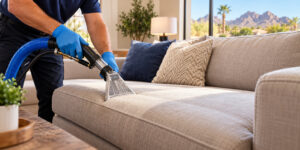
Professional upholstery cleaning in Phoenix, AZ typically costs around $100 to $300 for a standard service, although the final price depends on
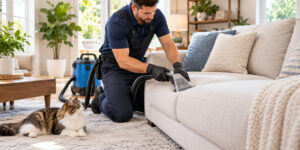
Yes, professional couch cleaning can often remove or significantly reduce cat urine smell. The final result depends on how much urine reached