
How Long Does a Sectional Couch Take to Dry After Cleaning?
A sectional couch can take anywhere from a few hours to 24 hours to dry after cleaning. In many cases, professionally cleaned
Hard water stains can make a clean shower look cloudy, chalky, and neglected. In Arizona homes, mineral residue can build up on shower walls, grout lines, and around fixtures as water dries and leaves minerals behind.
The right cleaning method depends on the surface. Ceramic and porcelain tile can often handle a mild vinegar solution, while marble, travertine, limestone, and other natural stone need a gentler, stone-safe approach. Identifying the tile first helps you remove buildup without damaging the finish.
Hard water contains dissolved minerals that remain after water evaporates. Repeated showers leave small amounts behind each time, eventually creating white spots, cloudy film, or rough mineral scale.
Soap residue can make the problem worse, especially around grout joints, niches, and corners where water sits longer.
Not every white or cloudy mark is hard water. Hard water buildup usually looks chalky, crusty, or hazy. Soap scum often feels waxier, while grout haze may appear as a thin film left from installation.
Natural stone can also turn dull from acid etching, which is surface damage rather than removable mineral residue. If grout stays dark after surface cleaning, our complete guide to tile and grout cleaning for Arizona homes explains why porous grout often holds buildup below the surface.
The most important step is knowing what kind of tile you have. A cleaner that works well on porcelain can permanently damage marble or travertine.
Glazed ceramic and porcelain are generally more tolerant of mild acidic cleaners than natural stone. For light to moderate hard water stains, diluted vinegar can often loosen mineral residue enough for gentle cleaning.
Test the cleaner in a small, less visible area first.
Do not use vinegar, lemon juice, or strong acidic descalers on marble, travertine, limestone, or other calcium-based stone. Acid can leave a dull, etched patch that cleaning cannot reverse.
Use a pH-neutral cleaner or a product specifically labeled for your stone. If the surface already looks dull or rough, professional inspection may be safer than trying stronger products.
Grout is more porous than most tile surfaces, so it can hold mineral residue, soap, and soil below the surface. Scrubbing harder does not always solve the problem.
If grout remains discolored after the tile looks clean, deeper treatment may be needed. This explanation of how professionals clean grout shows why proper chemistry, agitation, and extraction matter.
For compatible ceramic or porcelain tile, a vinegar solution is often enough for fresh spots or light mineral film. Do not use this method on natural stone.
Mix equal parts white vinegar and warm water in a spray bottle. Apply it to the stained tile and let it sit for about 10 to 15 minutes without allowing it to dry.
Use a microfiber cloth, soft non-abrasive pad, or nylon brush to loosen the residue. Work in small sections, then rinse thoroughly and dry the tile with a microfiber towel.
Older deposits may not disappear after one treatment. Thick scale often builds near the shower floor, fixtures, ledges, and other areas that stay wet.
Start by repeating the appropriate mild treatment rather than jumping to the strongest cleaner available. For ceramic or porcelain, a tile-safe calcium or lime remover may be appropriate if the manufacturer confirms it is compatible with the tile and grout.
Avoid steel wool, metal scrapers, harsh abrasive pads, and random chemical combinations. These can scratch tile, damage grout, or discolor fixtures.
Natural stone needs a different approach because many common hard water remedies are acidic. What removes mineral scale from ceramic can etch marble, travertine, or limestone.
Choose a pH-neutral or stone-specific mineral cleaner approved for your exact material. Apply it according to the directions and use a soft cloth or non-abrasive white pad with light pressure.
If the cloudy area does not improve, stop before trying a stronger acid. The mark may be etching rather than residue, which can require polishing or restoration instead of additional cleaning.
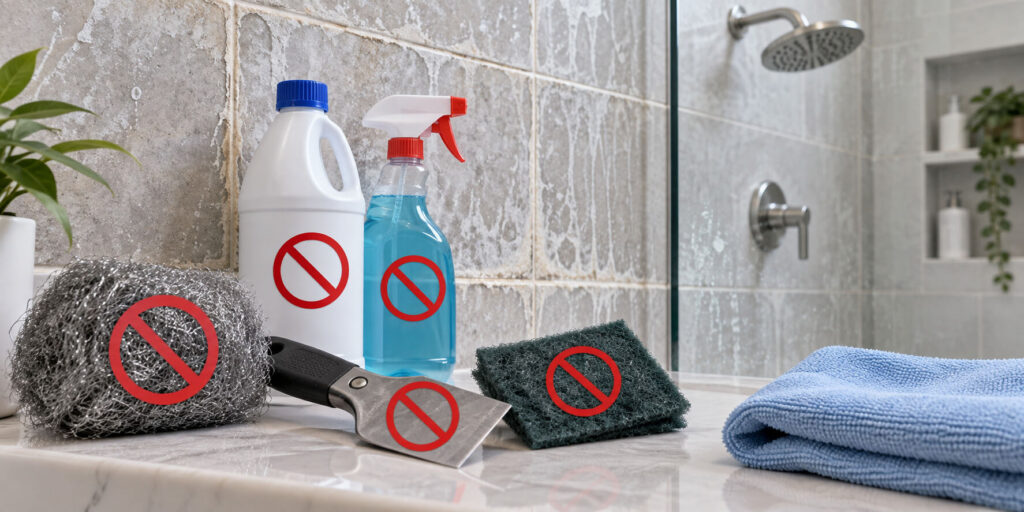
The wrong product can turn a cleaning problem into permanent damage. Avoid:
When in doubt, use a product approved by the tile manufacturer and test it first.
DIY cleaning makes sense for light spots and manageable buildup. Professional cleaning becomes more practical when mineral scale is thick, grout stays discolored, or you are unsure what material you have.
HydroCare Services provides professional tile and grout cleaning in Phoenix for showers, bathrooms, kitchens, and other tiled surfaces. We inspect the tile and grout first, then match the cleaning approach to the material and buildup.
Once the tile and grout are clean, reducing how much moisture and residue the grout absorbs can make routine maintenance easier.
For porous grout, sealing can reduce future staining and simplify upkeep. HydroCare also provides grout sealing and color sealing in Phoenix when grout needs added protection after cleaning.
Prevention is easier than removing months of mineral scale. A few simple habits can slow buildup:
A quick wipe after showering takes far less effort than removing thick mineral buildup later.
How To Get Rid Of Hard Water Stains On Shower Tiles?
For ceramic or porcelain tile, a 50/50 mixture of white vinegar and warm water can help loosen light mineral buildup. Let it sit briefly, scrub gently with a non-abrasive pad, rinse, and dry. Do not use vinegar on marble, travertine, or limestone.
How Can I Remove Hard Water Stains From My Bathroom Tiles?
First identify the tile material. Use a mild acidic method only on surfaces that can safely tolerate it. Natural stone requires a pH-neutral or stone-safe cleaner. Heavy buildup may need a compatible mineral remover or professional cleaning.
How Can I Remove Really Stuck Water Stains From My Shower?
Repeat a safe treatment before increasing strength or abrasion. For compatible ceramic and porcelain, a manufacturer-approved calcium or lime remover may help. If buildup remains thick or the surface is natural stone, consider professional cleaning.
Can Vinegar Remove Hard Water Stains From Shower Tile?
Yes, vinegar can help dissolve light calcium and mineral buildup on many ceramic and porcelain surfaces. It should not be used on acid-sensitive natural stone such as marble, limestone, or travertine.
What Is The Best Cleaner For Calcium Buildup On Shower Tile?
The best cleaner depends on the tile. Diluted vinegar may work for light buildup on compatible ceramic or porcelain. Heavy deposits may require a tile-safe mineral remover, while natural stone needs a product approved for that material.
Why Do Hard Water Stains Keep Coming Back?
The stains return because minerals are left behind whenever hard water dries on the tile. Regular squeegeeing, drying wet areas, cleaning fresh spots early, and maintaining grout or stone sealing can help slow the cycle.
A sectional couch can take anywhere from a few hours to 24 hours to dry after cleaning. In many cases, professionally cleaned

Professional upholstery cleaning in Phoenix, AZ typically costs around $100 to $300 for a standard service, although the final price depends on

Yes, professional couch cleaning can often remove or significantly reduce cat urine smell. The final result depends on how much urine reached