
Can Professional Couch Cleaning Remove Cat Urine Smell?
Yes, professional couch cleaning can often remove or significantly reduce cat urine smell. The final result depends on how much urine reached
Choosing kitchen flooring in Phoenix is about more than color and style. The floor has to handle spills, foot traffic, desert dust, pets, strong sunlight, and years of routine cleaning.
For many Phoenix-area homes, porcelain tile and quality luxury vinyl plank are the strongest all-around choices. Tile offers excellent durability and water resistance, while LVP gives you a softer feel and convincing wood-look styles. Laminate, engineered hardwood, concrete, and natural stone can also work when they fit the room and your priorities.
Large windows can expose flooring to strong sunlight, while dust and fine grit tracked indoors can make surface wear more noticeable.
Many Valley homes are also built on concrete slabs. That makes the surface underneath just as important as the finished floor. Cracks, uneven areas, old adhesive, and poor preparation can affect how tile, laminate, and floating floors perform.
No single material is right for every kitchen. The best choice depends on how the room is used and whether durability, comfort, appearance, or budget matters most.
Porcelain tile handles spills, scratches, and heavy foot traffic well and comes in large-format, stone-look, and wood-look designs.
The tradeoff is a harder feel underfoot and ongoing grout care. The slab also needs proper preparation. HydroCare provides professional tile installation in Phoenix for kitchens where surface preparation, layout, spacing, and clean finishing matter.
Luxury vinyl plank, or LVP, is a strong choice for homeowners who like the look of wood but want easier maintenance. It feels softer and quieter than tile and works well in open kitchens that continue into dining or living areas.
Product quality matters. Kitchens with intense afternoon sun should use flooring rated for the conditions in the room, since lower-grade planks can be more vulnerable to fading or visible wear.
Modern waterproof laminate can suit homeowners who want a realistic wood look at a moderate price. It is easy to maintain and can create a consistent finish across connected rooms.
Check the specifications carefully. Water-resistant and waterproof are not always the same thing. Proper laminate flooring installation in Phoenix also depends on a flat, stable base and the right underlayment.
Engineered hardwood is often more practical than solid hardwood when you want genuine wood in a Phoenix kitchen. Its layered construction provides better dimensional stability than a solid plank.
It still needs more care than tile or LVP. Spills should be cleaned quickly, scratches can happen, and the installation method needs to suit the slab or subfloor.
Concrete fits naturally with many modern Phoenix interiors. When the slab is suitable, polishing or staining can create a durable, seamless surface that is easy to clean.
The main downside is comfort. Concrete is hard underfoot, and cracks or imperfections may remain visible. Proper sealing also matters around food, grease, and liquids.
Travertine and other natural stone can work beautifully in Arizona interiors. Stone is durable and distinctive, but many products require more maintenance and sealing than porcelain tile.
These are two of the best kitchen flooring options for Phoenix homes, but they solve different problems. The right choice depends on how you want the floor to feel and perform every day.
Tile is the stronger choice when water resistance, scratch resistance, and long-term wear are the priorities. It also works well when the kitchen connects to tiled hallways or entryways.
The harder feel underfoot and grout maintenance are the main tradeoffs. When an older floor develops dark or difficult-to-clean grout, professional tile and grout cleaning in Phoenix can help refresh the surface without replacing the floor.
LVP is often better when you want a warmer, softer feel and continuous wood-look flooring through the kitchen and nearby rooms. It is also quieter and more forgiving underfoot than tile.
For busy households, a well-made LVP product offers a useful balance of appearance, comfort, moisture resistance, and easy upkeep.
If several materials could work, start with the problem you most want the floor to solve.
A good flooring product cannot make up for a poorly prepared surface. Before new flooring goes down, the slab should be checked for cracks, high or low spots, old adhesive, moisture concerns, and anything else that could interfere with installation.
This matters especially with large-format tile and floating floors. Preparation may add time or cost, but skipping it can lead to movement, uneven edges, weak joints, or other problems later.
If you are budgeting a remodel, HydroCare’s guide to flooring installation costs in Phoenix explains how material choice, old flooring removal, preparation, and labor can affect the final price. You can also check how long flooring installation takes in Phoenix when planning around kitchen downtime.
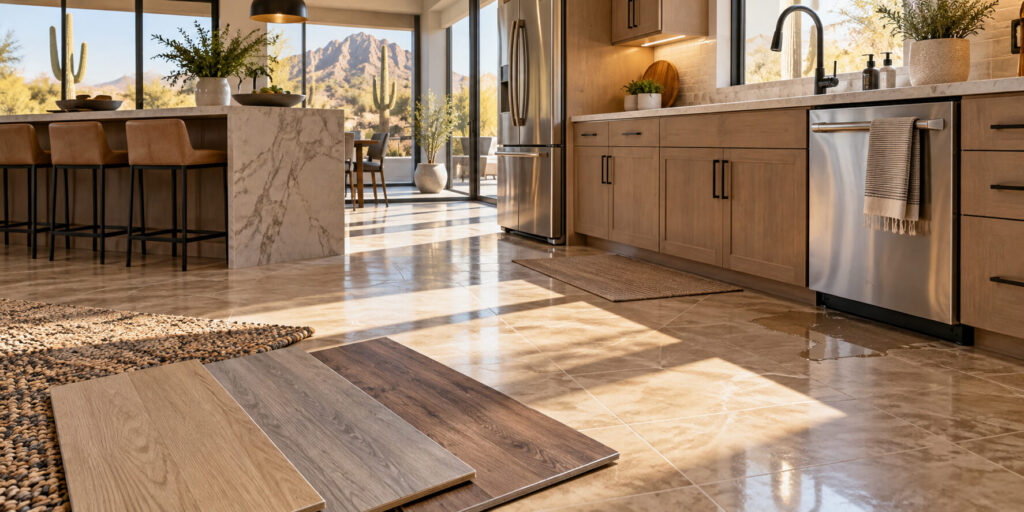
Some materials can work in the right home, but they require more careful product selection or maintenance.
Solid hardwood is attractive, but kitchen moisture, scratches, and dry conditions can make it less forgiving than engineered wood. If real wood is the goal, consider acclimation, installation method, and ongoing care before committing.
Not all vinyl plank is built the same. A bargain product may be less tolerant of heavy traffic, direct sun, or an imperfect surface.
Look beyond the color and plank size. Construction, wear layer, warranty requirements, and manufacturer installation specifications all matter.
Traditional laminate is a riskier choice around sinks and appliances if it is not designed for moisture. High-gloss floors can also show Phoenix dust, footprints, and small scratches quickly.
Matte and low-sheen finishes are often easier to live with in a kitchen that gets used every day.
Start with the way your household actually uses the kitchen. A home with dogs and children has different needs than a quiet condo, while an open-plan remodel may need one material to work across several connected rooms.
Pay attention to sunlight, comfort, maintenance, moisture resistance, and the condition of the existing floor. Appliance leaks should also factor into the decision. A failed dishwasher or refrigerator line can send water under cabinets and flooring quickly.
If water spreads beyond a routine spill, prompt water damage cleanup in Phoenix can help reduce how far moisture travels into flooring and surrounding materials.
HydroCare Services works with Phoenix homeowners replacing worn floors, remodeling kitchens, and upgrading high-use rooms. Our team handles tile and laminate flooring installation along with related floor-covering work, with careful attention to the existing surface before new material is installed. The goal is a floor that fits the room, performs well, and makes sense for the way the home is actually used.
Kitchen flooring decisions usually come down to durability, moisture, comfort, and maintenance. Here are quick answers to common questions Phoenix homeowners ask.
Porcelain tile and quality LVP are two of the best all-around choices. Tile offers strong durability and water resistance, while LVP provides a softer feel and wood-look appearance.
Tile is usually better when durability, moisture resistance, and scratch resistance matter most. Vinyl is often better when comfort, quieter rooms, and a continuous wood-look design are higher priorities.
Yes. Quality LVP can work very well in Phoenix kitchens and open-plan living areas. Choose a product suited to the room’s sunlight exposure and make sure the slab is properly prepared.
Waterproof or highly water-resistant laminate can work well in many kitchens. Standard laminate is less forgiving around appliance leaks or standing water, so checking the product’s moisture rating is important.
Porcelain tile is one of the most durable residential kitchen flooring choices because it handles moisture, foot traffic, scratches, and routine cleaning well when installed correctly.
Yes. Many kitchen flooring materials can be installed over concrete, but the slab should first be checked for flatness, cracks, moisture, old adhesive, and other conditions that may require preparation.
Yes, professional couch cleaning can often remove or significantly reduce cat urine smell. The final result depends on how much urine reached
Moving into a new home is exciting, but it is also one of the best opportunities to clean the property thoroughly. Empty

Travertine is a natural fit for many Phoenix homes. Its warm tones work well on indoor floors, patios, showers, walkways, and pool