
How Often Should Area Rugs Be Professionally Cleaned In Phoenix?
For most Phoenix homes, having area rugs professionally cleaned every 12 to 18 months is a practical starting point. This schedule helps
For most Phoenix homes, having area rugs professionally cleaned every 12 to 18 months is a practical starting point. This schedule helps remove the dust, soil, pet hair, spills, and everyday buildup that regular vacuuming may leave behind.
However, there is no single cleaning schedule that works for every rug. A busy living room rug may need professional cleaning every 6 to 12 months, while a lightly used rug in a guest bedroom may comfortably go 18 to 24 months between cleanings.
Here is a simple guide for Phoenix homeowners:
| Rug Use Or Household | Suggested Professional Cleaning |
|---|---|
| Average household | Every 12 to 18 months |
| Homes with pets or children | Every 6 to 12 months |
| High-traffic rugs | Every 6 to 12 months |
| Entryway and hallway rugs | Every 6 to 12 months |
| Low-traffic bedroom or guest room rugs | Every 18 to 24 months |
| Wool, Oriental, antique, or delicate rugs | Based on condition and professional assessment |
The best schedule ultimately depends on the rug’s material, where it is located, how much traffic it receives, and whether there are stains, odors, or pet-related concerns.
Phoenix presents some cleaning challenges that homeowners in wetter or less dusty climates may not experience as often. Fine desert dust and outdoor grit can enter the home through doors, shoes, pets, open windows, and everyday activity.
Over time, these particles settle deeper into area rug fibers. That means a rug can continue looking reasonably clean on the surface while holding significantly more soil underneath.
Phoenix dust is extremely fine, which makes it easy for particles to move past the top layer of a rug. Vacuuming removes loose surface soil, but it may not completely remove particles that have settled deeper into dense fibers or the rug foundation.
If your home regularly deals with dust, keeping up with routine vacuuming and scheduling deeper cleaning when needed can prevent buildup from becoming harder to manage. Similar maintenance principles apply to Arizona homes dealing with pets and desert dust.
Area rugs near exterior doors, patios, garages, hallways, and frequently used living spaces usually collect dirt faster than rugs in quieter rooms.
Small pieces of grit can become worked into the pile every time someone walks across the rug. Cleaning these rugs more frequently helps remove the buildup before it becomes heavily embedded.
Dogs and cats can shorten the time between professional rug cleanings. Pet hair, outdoor soil, dander, body oils, and occasional accidents can all accumulate in rug fibers.
A household with several pets or recurring accidents may benefit from professional cleaning closer to every 6 to 12 months. If an accident leaves a smell that keeps returning, the problem may need more than surface deodorizing. HydroCare’s guidance on removing pet odors without damaging fibers explains why deeper odor sources can sometimes remain after basic cleaning.
Children, frequent guests, entertaining, and everyday family activity all increase the amount of traffic an area rug receives.
A rug in the center of a busy family room will generally need cleaning sooner than a decorative rug in an office or spare bedroom. Cleaning frequency should reflect how the rug is actually used rather than relying only on the calendar.
The material and construction of your rug also affect how frequently it should be professionally cleaned. Some everyday rugs tolerate routine deep cleaning well, while valuable or delicate rugs require more individualized care.
A professional should consider the fiber type, dyes, backing, age, construction, condition, and soil level before deciding how the rug should be cleaned.
Synthetic rugs made from materials such as nylon, polyester, or polypropylene are common in busy homes because they are generally durable and practical.
For a normally used synthetic rug, professional cleaning every 12 to 18 months may be enough. Rugs exposed to children, pets, heavy traffic, or entryway dirt may need attention every 6 to 12 months instead.
Wool rugs can hold a surprising amount of soil without immediately looking dirty. Their dense fibers can hide dust and fine particles below the visible surface.
Rather than waiting for obvious discoloration, pay attention to traffic patterns, dullness, odor, and the amount of soil the rug encounters. A wool rug should also be cleaned using methods appropriate for its construction and dyes.
Oriental and Persian rugs should not automatically be placed on the same cleaning schedule as an inexpensive synthetic area rug.
Age, fiber type, dyes, construction, fringe, previous repairs, and overall condition all matter. Professional inspection is particularly important before cleaning a valuable rug because the safest method can vary considerably from one rug to another.
For antique, silk, handmade, or heirloom rugs, cleaning should be based more on condition than a rigid yearly schedule.
If the rug receives limited traffic, it may not need frequent deep cleaning. When cleaning is necessary, careful assessment and specialized handling are more important than trying to meet an arbitrary date.
Two identical rugs in the same Phoenix home can need cleaning at very different times depending on where they are placed.
Traffic, food, pets, footwear, and proximity to exterior doors all affect how quickly soil builds up.
Living room rugs usually experience regular foot traffic, family activity, pets, snacks, and occasional spills. In a busy household, cleaning every 6 to 12 months may be appropriate.
Lower-use living rooms may comfortably stay closer to the 12 to 18 month range.
Entryway rugs often have one of the toughest jobs in the home. They collect outdoor dust, shoe soil, pet debris, and concentrated traffic.
These rugs should be vacuumed frequently and may require professional cleaning sooner than rugs located farther inside the home.
Dining room rugs deal with a different type of soil. Crumbs, food spills, drinks, chair movement, and regular foot traffic can all affect the fibers.
If spills are frequent or stains are becoming harder to remove, it may make sense to clean the rug before the normal 12 to 18 month interval.
Bedroom rugs generally accumulate soil more slowly, especially when shoes are not worn indoors. Guest-room rugs may receive even less traffic.
Depending on the household, these rugs may go 18 to 24 months between professional cleanings while still receiving regular vacuuming and spot care.
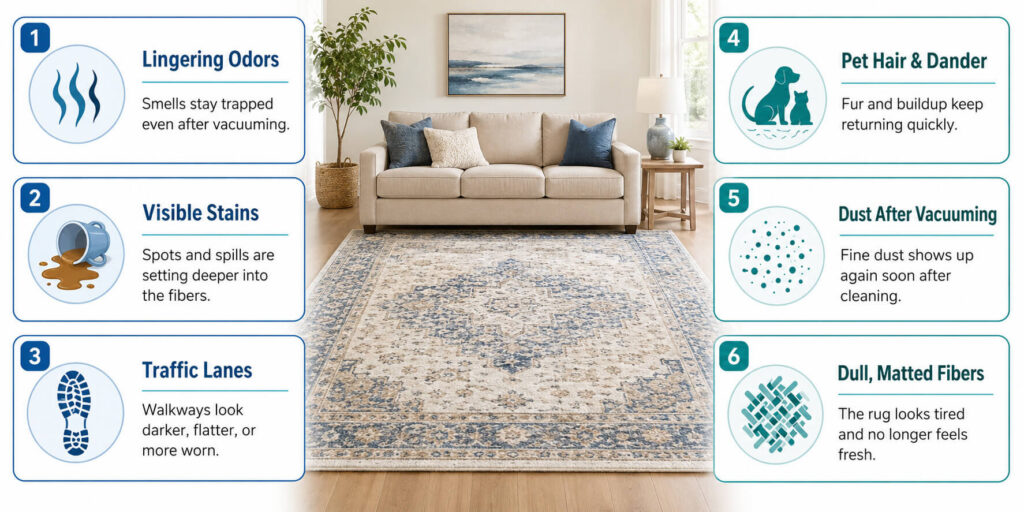
You do not have to wait until the scheduled cleaning date if the rug is already showing signs of buildup. Condition is often a better guide than time alone.
Consider professional area rug cleaning sooner if you notice:
If you are unsure whether the condition justifies professional service, understanding what professional rug cleaning costs in Phoenix can also help you compare the value of cleaning with the rug’s size, material, soil level, and overall condition.
Regular vacuuming is one of the most important things you can do for an area rug. It removes loose dirt, pet hair, crumbs, and dust before those materials become more deeply embedded.
Professional cleaning serves a different purpose. It addresses soil, residue, traffic buildup, spots, and odors that routine surface maintenance may not fully remove.
Think of vacuuming as ongoing maintenance and professional cleaning as a periodic deeper reset. Maintaining both is usually more effective than waiting until the rug appears heavily soiled.
A few simple habits can extend the time your rug stays fresh and reduce unnecessary wear.
Vacuum regularly based on traffic rather than following one schedule for every room. High-use rugs may need attention several times a week, while a lightly used bedroom rug may need much less.
Rotate larger rugs periodically so that one section does not receive all the foot traffic or furniture pressure. Address spills quickly by blotting rather than aggressively scrubbing, and avoid soaking the rug with household cleaning products.
Reducing tracked-in soil also makes a major difference. Entry mats and a shoes-off routine can help keep some Phoenix dust and outdoor grit from reaching rugs deeper inside the home.
Waiting until a rug looks obviously dirty is usually not the best strategy.
Patterned, dark-colored, wool, and dense-pile rugs can conceal considerable soil. By the time traffic lanes become dark or the entire rug begins looking dull, buildup may already be well established.
Instead, consider the time since the last professional cleaning, the amount of traffic the rug receives, pets in the household, its location, and whether normal vacuuming still leaves it looking and feeling fresh.
Some situations call for cleaning even if the rug was professionally cleaned recently.
A major spill, repeated pet accident, strong lingering odor, unusual soil exposure, or significant staining should be addressed based on the problem rather than waiting until the next scheduled cleaning.
Professional cleaning can also make sense after moving into a new home when you do not know the rug’s previous maintenance history. The same applies when a rug has spent years in storage or has gone a long time without deeper cleaning.
The goal is not to clean every rug as frequently as possible. It is to clean it when needed while using a method appropriate for its material and condition.
HydroCare Services helps Phoenix-area homeowners deal with area rugs affected by desert dust, everyday traffic, pet hair, spills, odors, and general buildup. Instead of treating every rug the same way, the team considers its material, condition, visible spots, odor concerns, soil level, and where it is used before recommending the appropriate approach. That same condition-based process is used for area rug cleaning in Scottsdale, where rugs can be evaluated for in-home or off-site care depending on what the material and level of buildup require.
Most area rugs in Phoenix should be professionally cleaned about every 12 to 18 months. Rugs in busy households, high-traffic areas, or homes with pets and children may need professional cleaning every 6 to 12 months.
Homes with pets often benefit from professional rug cleaning every 6 to 12 months, depending on shedding, outdoor activity, accidents, odor, and traffic. A rug with repeated urine accidents or persistent odors may need treatment sooner.
Many wool rugs can go a year or longer between professional cleanings, but traffic and condition matter more than a fixed schedule. Because wool can hide embedded soil, professional inspection can help determine when deeper cleaning is appropriate.
It can. Phoenix’s dry environment and fine outdoor dust can contribute to buildup in frequently used rugs, particularly those near entrances and high-traffic areas. Regular vacuuming helps, but periodic professional cleaning can address soil that settles deeper into the fibers.
Persistent odors, visible stains, dull colors, dark traffic areas, embedded pet hair, a gritty feel, or a rug that no longer looks fresh after vacuuming are all signs that deeper cleaning may be appropriate.
Vacuuming is essential for removing loose surface dirt and preventing excessive buildup, but it does not always remove deeper soil, stains, residues, or odor sources. Professional cleaning complements regular vacuuming rather than replacing it.
Improper cleaning can damage certain rugs, which is why the material, dyes, construction, backing, age, and condition should be evaluated before cleaning. Delicate, antique, silk, Persian, and handmade rugs may require specialized handling.
It depends on the rug. Some everyday rugs can be cleaned effectively in the home, while rugs with delicate fibers, heavy soil, deeper odors, or specialized construction may be better suited for off-site cleaning. A professional assessment can determine which approach makes the most sense.
For most Phoenix homes, having area rugs professionally cleaned every 12 to 18 months is a practical starting point. This schedule helps

A freshly cleaned carpet should feel soft once it dries. If it feels tacky, greasy, or slightly stiff instead, the most common

Professional carpet cleaning can make a major difference in how your home looks and feels, but a little preparation can help the