
How Often Should Area Rugs Be Professionally Cleaned In Phoenix?
For most Phoenix homes, having area rugs professionally cleaned every 12 to 18 months is a practical starting point. This schedule helps
Phoenix homes deal with desert dust, pollen, pet hair, construction debris, and long cooling seasons. Because air conditioning systems run for much of the year, many homeowners wonder whether professional duct cleaning is worth the cost.
Air duct cleaning in Phoenix commonly costs several hundred dollars, but pricing depends on the home, the HVAC layout, and the amount of buildup. This guide explains realistic costs, practical benefits, warning signs, and what should happen during a professional appointment.
Professional air duct cleaning is more involved than wiping register covers or vacuuming near a few vents. A proper service focuses on removing accumulated material from the pathways that move conditioned air through the home.
The scope varies by provider, but thorough cleaning may include supply ducts, return ducts, main trunk lines, registers, grilles, and accessible parts of the air handler. Blower or coil cleaning may be included or priced separately, so homeowners should confirm the complete scope before work begins.
Negative pressure should pull loosened dust toward a collection unit instead of allowing it to spread through the rooms.
For many Phoenix homes, professional duct cleaning falls between approximately $300 and $750. Smaller systems may cost less, while large homes, multiple HVAC units, difficult access, and heavy contamination can push the price above $1,000.
| Home Or System Size | Typical Phoenix Cost |
|---|---|
| 1,000 To 1,500 Square Feet | $300 To $550 |
| 1,500 To 2,500 Square Feet | $450 To $750 |
| More Than 2,500 Square Feet | $650 To $1,200+ |
| Multiple HVAC Systems | Custom Estimate |
These are planning ranges rather than guaranteed prices. Accurate estimates consider home size, vent and return counts, system count, and access.
Two similarly sized homes may have very different duct layouts. A single-story property with one accessible system is usually more straightforward than a two-story home with ceiling vents, long runs, and two air handlers.
Other price factors include duct material, recent remodeling, heavy dust, pest evidence, and whether blower components or other HVAC areas are included. Companies may charge per vent, by square footage, or at a flat rate, so compare the full scope rather than the headline number.
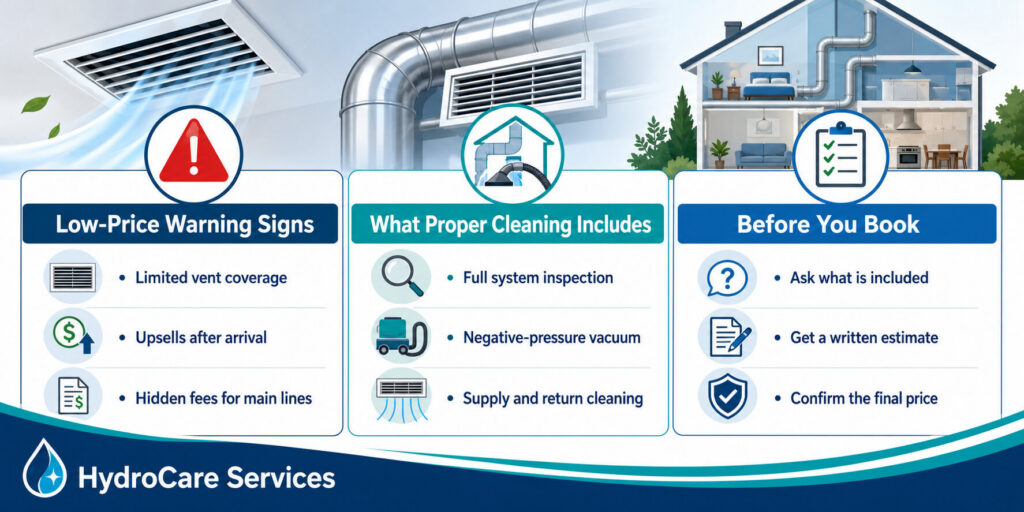
A $99 whole-house offer can sound attractive when other quotes cost several hundred dollars. Many extremely cheap promotions, however, cover only a small part of the system or become an opportunity for aggressive upselling.
The advertised rate may apply to a limited number of vents, one return, basic register cleaning, or an inspection. Once the crew arrives, customers may be told that main lines, extra vents, sanitizing, or equipment fees cost much more.
Before scheduling, ask:
A reputable company should answer clearly without using fear or pressure to sell unnecessary treatments.
Phoenix dust and heavy HVAC use can contribute to buildup, especially in homes with pets, nearby construction, or recent remodeling. Still, local conditions do not mean every home needs air duct cleaning on a fixed annual schedule.
The right decision depends on what is happening inside the system. Understanding when air duct cleaning is worth it can help homeowners separate genuine warning signs from normal household dust.
Cleaning may be appropriate when visible debris blows from registers, thick buildup is present inside duct openings, or musty odors begin when the HVAC runs. Pest evidence, nesting material, renovation residue, or unexplained debris are also strong reasons to arrange an inspection.
Weak airflow can justify a closer look, but cleaning is not always the solution. A dirty filter, closed damper, damaged duct, crushed flex line, or HVAC problem may be responsible instead.
A light layer of dust on a register cover is normal. Cleaning may provide limited value when there are no unusual odors, no visible debris, no pest activity, and airflow remains consistent.
Start with basic maintenance. Replace overdue filters, keep return vents open, clean accessible grilles, and arrange HVAC service when mechanical performance is the real concern.
The benefits depend on whether meaningful buildup is present. Responsible providers should set realistic expectations instead of promising that one service will solve every indoor air quality or energy concern.
Cleaning can remove construction residue, pet hair, loose particles, and heavy dust from duct surfaces. It may support airflow when debris creates a restriction and reduce odors connected to removable material inside the system.
However, cleaning cannot repair leaking connections, crushed ducts, poor system design, or moisture problems. It should not be promoted as a guaranteed cure for allergies or a promise of lower energy bills.
Dust also enters through doors, windows, clothing, pets, carpets, and furniture. Understanding why Phoenix homes get dusty so fast helps homeowners address more than one source.
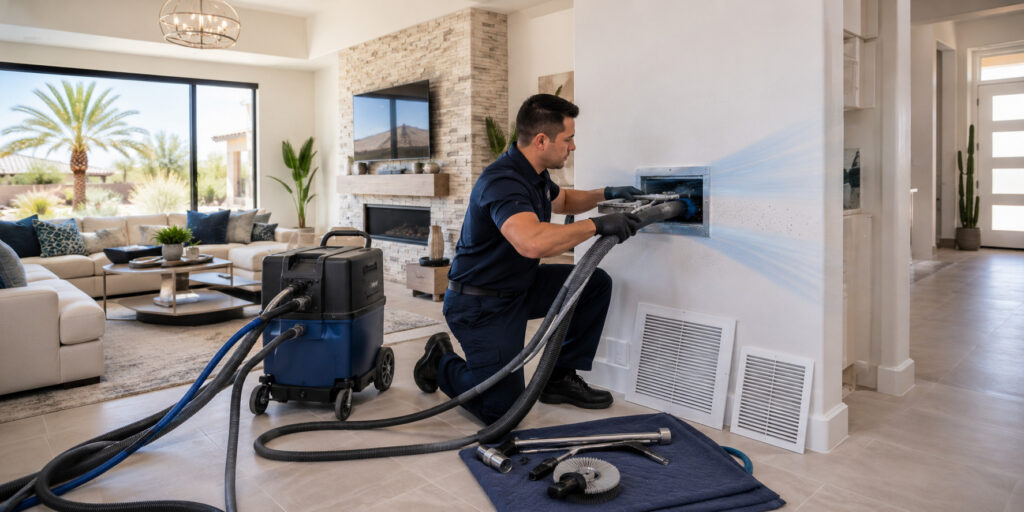
A legitimate residential appointment generally takes several hours. The technician should explain the service scope, protect the work area, and confirm optional treatments before beginning.
The technician reviews the HVAC layout, checks access, and asks about dust, odors, pests, airflow, or recent remodeling. Furniture may need to be moved away from vents, and protective coverings can be placed near equipment paths.
A collection unit creates negative pressure inside the system. Rotary brushes, compressed-air tools, or air whips loosen debris so it can be pulled toward the vacuum instead of released indoors.
Supply and return pathways should both receive attention. Visible grilles and register covers are cleaned separately, while accessible blower or air-handler components may be addressed if included.
After cleaning, access points should be sealed, registers reinstalled, and work areas left clean. The technician should explain what was found and may provide before-and-after photographs.
Most homes take around three to five hours, although larger properties or multiple systems may take longer. A claimed whole-house service completed in only a few minutes is unlikely to involve thorough source removal.
Clear access to registers and the air handler, secure pets, and confirm that any added charge requires approval.
A haboob can leave dust throughout the property, but one storm does not automatically mean the ducts need cleaning. Check the filter, clean the register covers, and watch for visible dust blowing from the vents. These practical tips for keeping desert dust out of your home can help reduce ongoing buildup.
Consider scheduling an inspection when heavy dust continues blowing from the vents or thick material is visible inside the openings.

Choose a provider based on process, transparency, and service scope rather than the lowest price. Ask whether supply and return ducts are included, what tools are used, and how debris will be contained.
The company should provide a written estimate, carry appropriate insurance, and explain optional sanitizers before applying them. Be cautious when a technician claims dangerous mold without evidence or pressures you into expensive treatment.
Air duct cleaning is also different from dryer vent cleaning in Phoenix. Dryer vent service removes lint from the appliance exhaust path, while duct cleaning addresses HVAC pathways.
HydroCare Services helps homes and businesses across Phoenix and nearby Valley communities address dust, debris, and airflow concerns. The team explains the scope, protects the property, and provides straightforward estimates. Carpet, upholstery, tile and grout, dryer vent, and water damage cleanup are also available when the property needs more than one solution.
Air duct cleaning can be useful when there is a clear problem to solve. Visible debris, renovation dust, pest activity, buildup-related odors, and material blowing from vents are stronger reasons to consider cleaning than a generic recommendation based only on time.
For professional air duct cleaning in Phoenix, call HydroCare Services at (602) 820-2462. The team can explain the service scope and provide a straightforward estimate based on what the system may actually need.
Many Phoenix homeowners can expect to pay between $300 and $750. Large homes, multiple HVAC units, difficult access, and heavy buildup can increase the total.
There is no universal schedule. Consider cleaning when inspection shows visible buildup, renovation debris, pest activity, unusual odors, or material coming from vents.
It can reduce dust stored inside ductwork when meaningful buildup is present. It cannot eliminate particles entering from outdoor air, fabrics, pets, and daily activity.
Removing a real airflow restriction may help, but lower bills are not guaranteed. Equipment condition, duct leaks, insulation, and thermostat settings also affect energy use.
Most homeowners can remain home. The equipment can be noisy, and pets should be kept away from rooms where technicians are working.
For most Phoenix homes, having area rugs professionally cleaned every 12 to 18 months is a practical starting point. This schedule helps

A freshly cleaned carpet should feel soft once it dries. If it feels tacky, greasy, or slightly stiff instead, the most common

Professional carpet cleaning can make a major difference in how your home looks and feels, but a little preparation can help the