
How Long Does a Sectional Couch Take to Dry After Cleaning?
A sectional couch can take anywhere from a few hours to 24 hours to dry after cleaning. In many cases, professionally cleaned
If your dog keeps peeing on the carpet, you’re not alone. It’s one of the most common and frustrating pet problems homeowners deal with. The tricky part is this: stopping it isn’t just about catching your dog in the act. It’s about removing the scent that keeps pulling them back and fixing the reason it’s happening in the first place.
That’s why the best solution is a two-part plan. First, you eliminate every trace of urine odor (even the part you can’t smell). Then you reset habits with structure, supervision, and a routine that makes “outside” the obvious option again.
This guide covers both: cleaning that actually works, how to tell accidents from marking, simple training resets, safe deterrents, and when it’s time to call a professional carpet cleaner in Phoenix.
Before you buy five sprays and scrub the same spot for the tenth time, take a step back. “Dog peeing on carpet” can mean very different things—puppy accidents, stress pee, a senior dog with urgency, or territorial marking. Each needs a slightly different approach.
Accidents usually look like a full pee—larger puddles, sometimes in a few spots if the dog moved while peeing. It often happens when they simply couldn’t hold it.
Common patterns include:
If your dog has been housetrained but suddenly starts having accidents, think routine disruption or health issue before assuming “bad behavior.”
Marking is usually smaller amounts, often repeated in the same zones. It’s your dog leaving a message, not emptying their bladder.
Marking tends to show up:
If your dog is peeing small amounts in the same places even after you cleaned, marking is likely part of the puzzle.
If the behavior is sudden or unusual, rule out medical causes. A urinary tract infection, bladder inflammation, incontinence, diabetes, kidney issues, or side effects from meds can all change bathroom behavior fast.
Call your vet if you notice:
This isn’t overreacting—it’s the fastest way to avoid weeks of frustration.
This is the most important part, and it’s the reason many DIY attempts fail. Dogs can smell urine far better than we can. If the odor remains—even faintly—they treat the spot like a “bathroom zone” and return.
Regular carpet cleaners often remove the stain but not the odor compounds that trigger repeat peeing. That’s why enzymatic cleaners matter. They’re designed to break down urine components instead of masking them.
Start with the right technique. The goal is to lift urine out, not rub it deeper.
Blot immediately. Use paper towels or clean cloth towels and press down firmly. Don’t scrub. Scrubbing spreads urine outward and pushes it into carpet fibers and padding.
Apply your enzymatic cleaner generously. Follow the label—especially dwell time. Many products require 10–15 minutes or more to work properly. If you spray and wipe immediately, you’re not giving the enzymes time to do their job.
Blot again after dwell time. Then let the area air-dry completely. Fans help.
If it’s an older spot, you may need to repeat. Old urine has had time to soak down and crystallize.
One reason the problem “won’t stop” is that there are multiple spots, not just one. Dogs often return to a general area and hit slightly different points each time.
A blacklight at night can reveal urine spots you didn’t realize existed—especially along baseboards, in hallways, or near furniture edges. Once you find the hidden areas, treat all of them. Otherwise, your dog will keep getting pulled back by the remaining odor.
If urine soaked through to the padding, surface cleaning won’t solve it. You may get temporary relief, then the smell returns as the carpet dries. That lingering scent is exactly what encourages repeat behavior.
Signs it reached the padding include:
At this point, professional cleaning often becomes the fastest path forward because the goal is deep extraction and odor removal, not just surface improvement.
Wool and handmade rugs need a gentler approach. Many off-the-shelf cleaners can discolor fibers or damage dyes. If your dog peed on a valuable rug, it’s often smarter to get professional guidance early rather than risking permanent damage with harsh DIY chemicals.
Cleaning alone rarely stops repeat peeing if your dog can immediately return to the “old bathroom.” The easiest way to break the loop is temporary restriction and supervision while you rebuild the right behavior.
For a short reset period, block off carpeted rooms where accidents happen. If you can’t block access, keep the dog on a leash indoors so you can interrupt the “sniff and circle” routine early.
This is not forever. It’s a quick reset that prevents setbacks while you clean and retrain.
Many dogs avoid soiling the area where they sleep. A properly sized crate can help during short periods when you can’t supervise.
The key is humane use:
If your dog has separation anxiety, crate training might not be the best tool—focus on more frequent breaks and controlled access instead.
If your dog has a “favorite spot,” protect it while you reset the behavior. A waterproof mat or temporary floor covering can prevent fresh urine from soaking into the carpet during the training period.
Be cautious with indoor pee pads on carpet. For some dogs, pads create mixed signals and can prolong the problem.
When you’re trying to stop a dog from peeing on the carpet, structure wins. You’re not waiting for the dog to “tell you”—you’re preempting the accidents.
Use a simple schedule for the first 48 hours:
Puppies and senior dogs often need more frequent breaks. If you’re unsure, go more often at first. It’s easier to taper down than to recover from repeated accidents.
Reward immediately after your dog finishes peeing outside. Not when you get back inside. Not five minutes later. Dogs connect consequences to what just happened, not what happened earlier.
Keep rewards simple: praise + a small treat + a calm “good outside.”
A big cause of indoor accidents is unrealistic expectations. Many dogs can’t hold it all day—especially puppies, seniors, small breeds, or dogs with anxiety.
If you’re out for long hours, consider:
The goal is to remove “I had no choice” from the equation.
Once you’ve cleaned deeply and restricted access, you can add deterrents and environmental changes that make the carpet less appealing as a bathroom.
Dogs often dislike strong odors like citrus or vinegar. A light deterrent spray can reduce re-checking behavior—but only after the area is fully cleaned. Otherwise, you’re spraying over urine odor and hoping for the best.
If you try a vinegar/citrus deterrent, test a hidden area first to avoid discoloration. Commercial pet deterrent sprays can also work well when used as directed.
Deterrents are not the main solution. Think of them as a “seatbelt” after you’ve done the real work.
Dogs are less likely to pee where they eat and play. Once the area is fully cleaned and dry, you can place a toy basket or a bed near the former accident zone to change what that area “means” to your dog.
Use this carefully—don’t place food on carpet if you’re worried about spills. The goal is to change the dog’s mental map of the space.
After cleaning, move furniture slightly or change layout if the dog has a strong habit of targeting one corner. Dogs often revisit exact patterns. Small changes can help break the routine while training takes effect.
Many articles list tips, but skip the “why.” If you understand the cause, you’ll stop guessing and start seeing progress.
Dogs pee indoors when they’re stressed—moving homes, new pets, new schedules, loud construction, visitors, or even a shift in family routine. Stress peeing is not “spite.” It’s a response.
In these cases, more structure, calm routines, and extra potty breaks help. Punishment makes it worse.
Some dogs pee when they get overly excited or feel submissive—often during greetings. These are usually small accidents, and they happen around people rather than when the dog is alone.
Solutions include calmer greetings, ignoring the dog for a minute when you arrive, and taking them outside immediately before high-excitement moments.
If a dog was trained with pads indoors and then expected to go outside, confusion is common. Dogs do what works. If peeing inside has ever been “okay,” they may repeat it.
Pick one clear plan and stick to it consistently for a couple of weeks. That consistency is what creates reliability.
Marking often increases when new scents appear—guests, a new pet, neighborhood animals, or even furniture brought in from outside. In intact males, neutering can reduce marking behaviors (talk with your vet).
Marking is best handled with:
Older dogs can have urgency, arthritis, or cognitive changes that affect house training. They may not get to the door quickly or may not wake you up in time.
In these situations, the kind approach is more breaks, easier access, and realistic expectations.
Some “common sense” reactions actually make the problem last longer.
Ammonia can smell similar to urine to a dog. That can encourage repeat peeing rather than stopping it.
Heat and moisture can spread contamination deeper into the carpet and padding if urine hasn’t been properly extracted and treated. Use enzymatic cleaning first, and only then consider deeper cleaning methods.
If you discover an accident later and scold your dog, they don’t connect the punishment to the earlier peeing. They connect it to you being unpredictable. That increases anxiety and can lead to more hidden accidents.
If the smell keeps coming back or your dog keeps targeting the same area, it often means urine is deeper than household tools can reach. At that point, DIY becomes a cycle of temporary improvement.
HydroCare Services provides carpet cleaning in Phoenix, AZ designed to remove embedded grime and help address lingering odor problems that contribute to repeat accidents. We can also help you understand what areas likely need deeper treatment and how to prevent re-soiling after your service.
If your dog keeps peeing on carpet in Phoenix, call (602) 820-2462 to schedule a cleaning or request a quick estimate.
In Phoenix, many homes stay closed up with the AC running most of the year. That can trap odors inside—even after you “cleaned the spot.” Proper drying and airflow matter. After any cleaning, use fans and ventilation to fully dry the carpet, because lingering moisture + lingering scent is the perfect recipe for repeat peeing.
Usually because the odor is still there—often deep in the carpet padding—or because the dog has formed a habit of using that area. Deep enzymatic treatment, access restriction, and routine resets work best together.
Look for a pet-specific enzymatic cleaner that clearly states it breaks down urine odor. Follow the label directions exactly, especially dwell time and drying time.
Vinegar can help as a mild deterrent after the area has been fully cleaned. It won’t remove urine odor the way enzymatic cleaners do, and it won’t fix the behavior root cause by itself.
Make sure your dog gets a potty break right before you leave, and consider a midday break if your schedule is long. Restrict access to carpeted rooms and use a safe containment plan to prevent unsupervised wandering.
Yes. A UTI or other medical issue can cause sudden accidents in a previously housetrained dog. If accidents start abruptly or your dog seems uncomfortable, call your vet.
A blacklight at night can reveal hidden spots that don’t show in daylight. Treat every spot you find—missing one can keep the behavior going.
If odor returns after drying, accidents keep happening in the same area, or multiple spots show under a blacklight, professional carpet cleaning can be the quickest way to reset the carpet and remove deep odor triggers.
Stopping a dog from peeing on the carpet starts with deep odor removal and a consistent routine. If you’ve tried DIY cleaning and the smell keeps coming back, HydroCare Services is ready to help with professional carpet cleaning in Phoenix, AZ.Call (602) 820-2462 to get a fast estimate and schedule service in Phoenix and the surrounding metro area.
A sectional couch can take anywhere from a few hours to 24 hours to dry after cleaning. In many cases, professionally cleaned
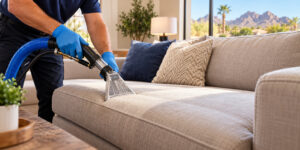
Professional upholstery cleaning in Phoenix, AZ typically costs around $100 to $300 for a standard service, although the final price depends on
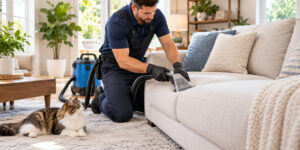
Yes, professional couch cleaning can often remove or significantly reduce cat urine smell. The final result depends on how much urine reached