
How Long Does a Sectional Couch Take to Dry After Cleaning?
A sectional couch can take anywhere from a few hours to 24 hours to dry after cleaning. In many cases, professionally cleaned
Water damage has a way of turning a normal day upside down fast. A pipe bursts under the sink, a water heater leaks overnight, a washing machine line fails, or monsoon rain finds its way inside. What feels like a manageable mess at first can spread much farther than most homeowners realize.
The first 24 hours matter because water does not stay in one place. It moves under baseboards, into carpet padding, behind cabinets, and into drywall long before the damage is fully visible. By the time the surface looks better, moisture may still be sitting inside the materials around it.
Arizona homeowners sometimes assume the dry climate gives them more time. It can help with surface evaporation, but it does not solve trapped moisture. When water gets into flooring, walls, or padding, fast action still matters.
Water damage in Arizona usually comes with two common mistakes. The first is underestimating how far the moisture traveled. The second is assuming the desert air will handle the drying on its own.
That is not how most damage works inside a home. Dry outdoor conditions do not automatically dry out wet drywall, soaked carpet padding, swollen baseboards, or moisture that has worked under flooring. In fact, the surface may feel better while the hidden areas are still wet enough to create bigger problems.
This is especially true after appliance leaks, plumbing failures, slab leaks, and monsoon-driven water intrusion. The faster you stabilize the area, reduce the spread, and start proper drying, the better your chances of limiting repairs later.
The first goal is not cleanup. It is safety. Before you start moving things, mopping, or pulling up rugs, slow down and make sure the area is safe to enter and work in.
If water is near outlets, cords, appliances, or anything electrical, do not step into it casually. If you can safely reach the breaker without crossing standing water, shut off power to the affected area. If not, stay out and get qualified help.
A small amount of water around the wrong spot can turn into a serious hazard. Safety always comes before saving flooring or furniture.
If the damage is coming from a plumbing line, overflowing fixture, appliance hose, or water heater, turn the source off as quickly as you can. In many Arizona homes, that may mean using the local shutoff valve under a sink or behind a toilet. In other cases, it may mean shutting off the main water supply.
If the source is storm-related, the priority shifts. You may not be able to stop outside water immediately, but you can start containing it with towels, bins, and fast item removal once conditions are safe.
Once the area is safe and the source is under control, start with the things that are easiest to save. Pick up papers, electronics, shoes, rugs, baskets, pet beds, and anything absorbent that is sitting on the floor.
If furniture has stayed dry so far, move it away from the wet zone. If it cannot be moved easily, place blocks or protective barriers under the legs to reduce staining and transfer onto damp carpet or hard flooring.
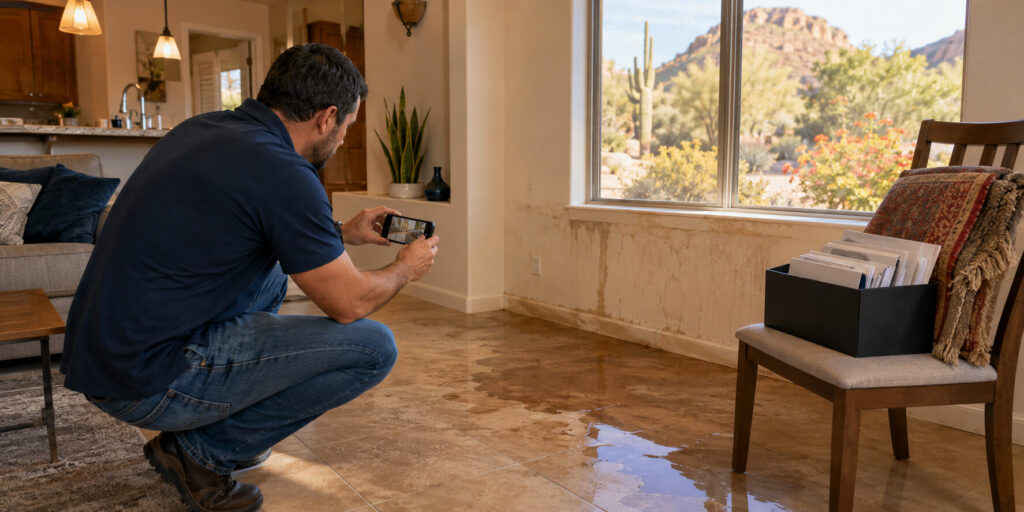
Many homeowners want to start tearing into the mess right away. That instinct makes sense, but before you move too much, document everything clearly.
Start wide so the full room is visible, then move in closer to capture the source, water lines, damaged flooring, walls, furniture, and belongings. If water reached multiple rooms, document each one before the layout changes.
This part matters for more than memory. A clean record of what happened, what was affected, and what the damage looked like at the start can make later conversations much easier.
You do not need anything fancy. Write down when you noticed the problem, what caused it if known, which rooms were affected, and what emergency steps you took right away. Keep receipts if you bought fans, gloves, plastic bins, towels, or emergency supplies.
That kind of simple timeline can help you stay organized while everything still feels chaotic.
If the damage is more than a small, contained cleanup, contact your insurer sooner rather than later. You do not need every answer before making the call. The important thing is getting the incident reported and understanding the next steps.
At this point, stay factual. Explain what happened, where it came from if known, and what areas are affected. Avoid guessing if you are not sure how far the damage traveled yet.
Once the area is safe and documented, the next step is reducing active water. The goal here is to remove what you can without creating more damage or exposing yourself to unsafe conditions.
For small clean-water incidents, towels, mops, and a wet/dry vacuum can help remove water from hard floors and reduce pooling. Work methodically and keep changing out saturated towels so you are not just spreading moisture around.
If the water is contaminated, smells foul, or came from a backup or questionable source, do not treat it like a simple household spill. That is a different situation and should not be handled casually.
This is one of the most common mistakes people make in a panic. A normal vacuum is not built for standing water and can create shock risk and equipment damage. Stick to tools designed for wet pickup if the situation is safe enough for DIY action at all.
You do not need the area to look normal in this stage. You need it to stop getting worse. Pull wet rugs off the floor. Lift lightweight items. Remove loose water from the surface. Clear space so airflow and drying efforts have a better chance to work.
If the water has already reached under flooring, into walls, or through carpet and padding, appearance can be misleading. That is when a surface-level cleanup stops being enough.
This is where many homeowners either make real progress or lose time. Drying is not just about air. It is about getting moisture out of materials that hold onto it.
Fans can help with clean-water situations by improving airflow across damp surfaces. Air conditioning can also help control indoor humidity while the area dries. Open windows only if outside conditions truly support drying.
During Arizona monsoon weather, open windows are not always your friend. If the outside air is humid or rain is still active, you may just be bringing more moisture into the house.
Area rugs, small furniture, fabric bins, and anything soft should be separated from wet flooring as soon as possible. Wet items stacked together dry slowly and often hold odor longer.
If cabinets, vanities, or furniture bases have taken on water, pay close attention to swelling, discoloration, or separation along the lower edges.
This is the part people miss. Baseboards may look only slightly affected while drywall behind them is wet. Carpet may feel damp only in one corner while the padding underneath is soaked much farther out. Laminate and engineered flooring can hold water beneath the visible surface.
If the area still feels cool, damp, musty, or spongy after the obvious water is removed, there is a good chance more moisture is still trapped than you can see.
By this point, you should have a better sense of whether the problem is shrinking or whether it is bigger than basic cleanup and air movement can solve.
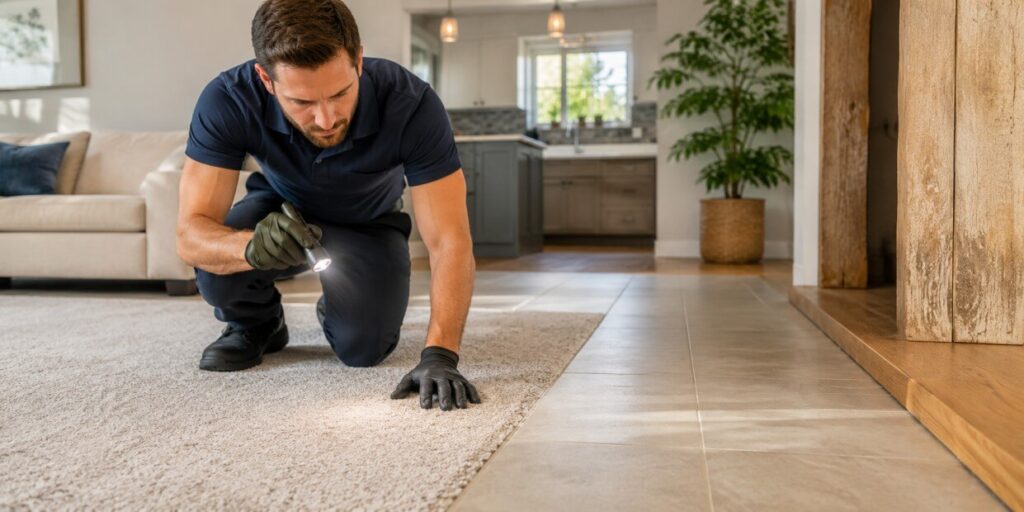
Some materials can bounce back. Others hold moisture in ways that create ongoing trouble. Carpet pad, drywall, insulation, particleboard, and some cabinet materials are especially vulnerable once they are thoroughly soaked.
If they stay wet too long, the issue stops being about puddles and starts becoming a larger drying and recovery problem.
It can be tempting to pull baseboards, tear out carpet, or cut into drywall immediately. In some cases, removal is part of the solution. But doing it too early, too aggressively, or without understanding what your insurer needs documented can create its own problems.
The better move is usually to stabilize, document, reduce active moisture, and bring in the right help when the damage clearly goes beyond surface drying.
A lot of secondary damage comes from rushed decisions, not the original leak itself. A few of the biggest mistakes to avoid are:
The goal in the first day is not perfect restoration. It is damage control done the right way.
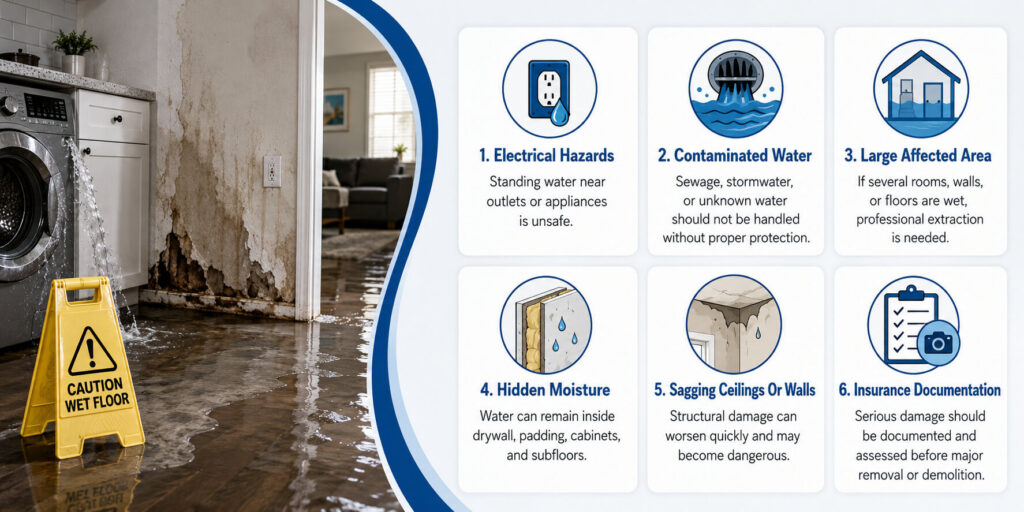
There is a clear point where towels, fans, and a shop vac stop being the right answer. If water traveled across multiple rooms, soaked carpet and padding, reached drywall, affected cabinetry, or kept spreading after your first cleanup steps, it usually needs a more complete response.
The same is true when the source is not clean water, when the home has a strong musty smell developing quickly, or when the affected area cannot be dried confidently with basic household equipment. In those cases, fast water damage cleanup in Phoenix can make a major difference in how much of the home can be stabilized before repairs get larger.
Clean-water events that affect salvageable carpet can also leave behind residue and odor even after the emergency phase is controlled. In some situations, follow-up professional carpet cleaning becomes part of getting the space back to normal once the structure is properly dried.
HydroCare Services is a local Phoenix cleaning company that helps homeowners and businesses deal with the mess that follows leaks, floods, burst pipes, and sudden water intrusion. The focus is straightforward: respond quickly, remove water, support drying, and give clear next steps based on what the property actually needs.
That kind of practical approach matters in the first 24 hours. When the damage is moving faster than towels and box fans can handle, having a local team that understands Phoenix homes, monsoon-related problems, and fast response needs can take a lot of pressure off the homeowner.
The first day after water damage is about fast, steady decisions. Make the area safe. Stop the source. Protect valuables. Document the damage. Remove what water you can safely handle. Start drying the right way. Then be honest about when the problem has gone beyond basic cleanup.
That sequence gives you a much better chance of limiting damage, protecting your home, and avoiding the kind of hidden moisture problems that only show up after the surface seems dry.
In Arizona, quick action still matters. The desert does not cancel out water damage. It just changes how some homeowners misread it.
Start with safety. Shut off electricity to the affected area if it is safe to do so, stop the water source if possible, and keep people and pets away from hazards. After that, protect valuables and begin documenting the damage.
Immediately. The first day is the most important window for reducing spread and limiting secondary damage. Even if the surface begins drying, moisture may still be trapped underneath.
Small, clean-water incidents may be manageable if the area is limited and safe. Larger events, contaminated water, soaked drywall, wet carpet padding, and widespread moisture usually need a professional response.
Sometimes, yes. But not always. If outdoor conditions are humid or stormy, opening windows may bring in more moisture. In Arizona, that is especially important during monsoon season.
No. A standard household vacuum is not designed for standing water and can create safety risks. Use only equipment intended for wet pickup, and only if the area is safe to work in.
Soft and porous materials usually take the hit first. Carpet padding, drywall, insulation, particleboard, fabric items, and cardboard can all deteriorate quickly once they are soaked.
Call as soon as the water has spread beyond a small, simple cleanup, reached structural materials, affected multiple rooms, or cannot be dried confidently with safe household methods.
A sectional couch can take anywhere from a few hours to 24 hours to dry after cleaning. In many cases, professionally cleaned

Professional upholstery cleaning in Phoenix, AZ typically costs around $100 to $300 for a standard service, although the final price depends on

Yes, professional couch cleaning can often remove or significantly reduce cat urine smell. The final result depends on how much urine reached