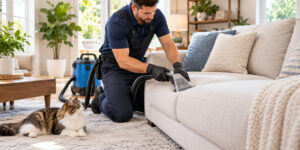
Can Professional Couch Cleaning Remove Cat Urine Smell?
Yes, professional couch cleaning can often remove or significantly reduce cat urine smell. The final result depends on how much urine reached
Pet odors in carpet can be frustrating, especially when the smell seems to come back no matter what you do. For Phoenix homeowners, this is a common problem in homes with pets, carpeted bedrooms, area rugs, and high-traffic living spaces. The challenge is not just getting rid of the smell. It is doing it in a way that does not damage the carpet fibers, leave behind residue, or make the problem worse.
A lot of people search for the best way to remove pet odor from carpet because they want a real solution, not a temporary cover-up. Air fresheners and scented sprays may make the room smell better for a short time, but they usually do not solve the source of the odor. If the issue has reached below the carpet surface, the smell can return again and again.
The good news is that there are safe ways to deal with pet odors without being too harsh on your carpet. The key is knowing what to do first, what to avoid, and when a deeper professional cleaning is the better option.
Pet odors can be stubborn because the source is often deeper than people think. When a pet accident happens, the moisture may soak through the surface fibers and into the backing or pad underneath. Once that happens, basic surface cleaning may improve the smell for a little while, but it may not fully remove it.
That is why many homeowners feel like they are cleaning the same spot over and over. The carpet may look fine, but the odor is still trapped deeper in the material. As the area warms up or gets damp again, the smell can become noticeable all over again.
In Phoenix homes, this can be especially frustrating because carpeted areas often see daily foot traffic, pets return to the same spots, and homeowners want a solution that works without causing fiber damage or discoloration.
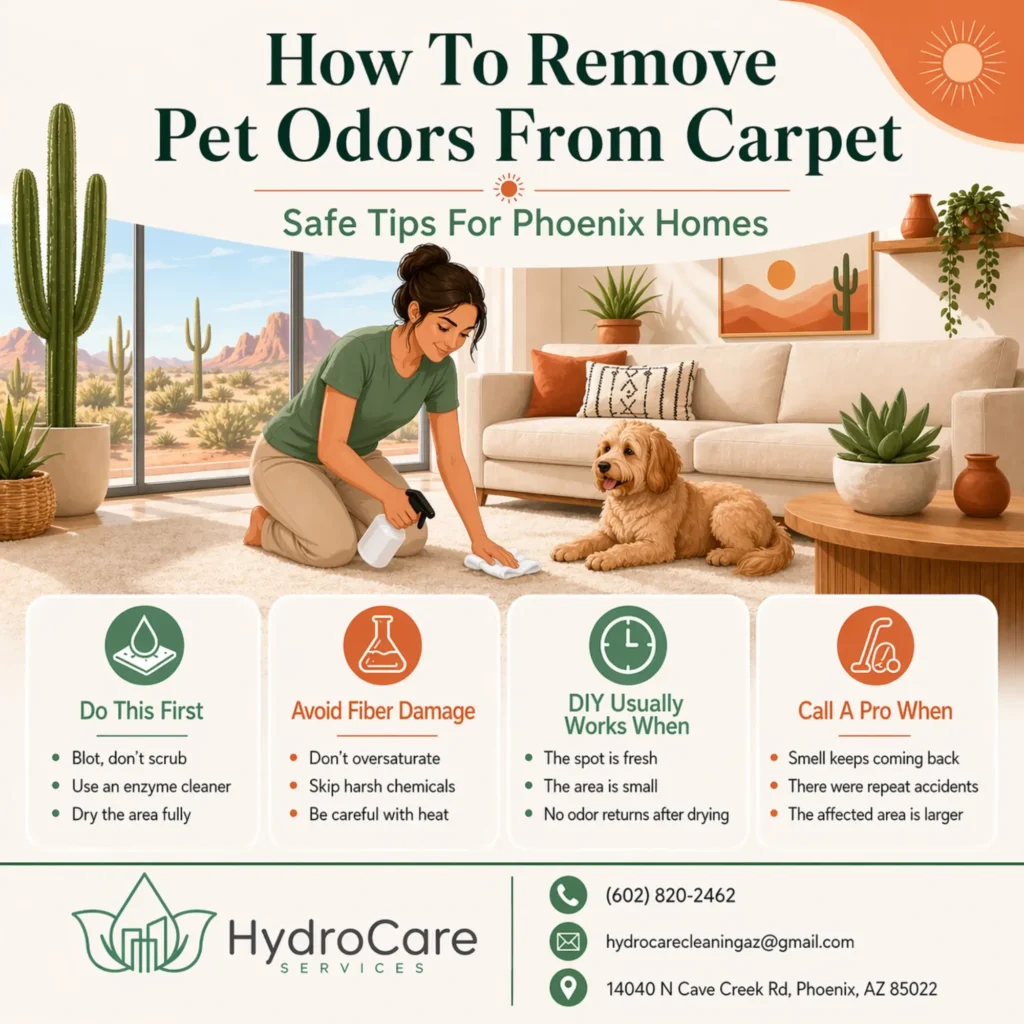
If the accident is fresh, your first move matters. The safest thing to do is blot the area with clean towels or paper towels. Press down firmly to absorb as much moisture as possible. Keep switching to a dry towel until you are no longer pulling much moisture from the carpet.
Avoid scrubbing. Scrubbing can spread the moisture outward, push it deeper into the carpet, and rough up the fibers. That can leave the carpet looking worn or fuzzy even after the smell improves. A gentle blotting approach is safer and more effective in the early stage.
This first step does not solve the entire problem, but it helps keep the odor from spreading and gives you a better chance of treating the spot without causing additional damage.
The best approach depends on whether you are dealing with a light surface odor or a deeper urine-related smell. In general, the goal is to neutralize the source while protecting the carpet fibers and backing.
Enzyme-based cleaners are often one of the safest options for urine-related odors. These cleaners are designed to break down the organic material causing the smell instead of just masking it. When used correctly, they can be much more effective than general household cleaners for pet accidents.
Baking soda can also help with mild surface odors. It is a simple option for deodorizing when the odor is light and has not soaked deeply into the carpet. It can help freshen the surface, but it is not always enough for older or heavier pet accidents.
Before using any product, it is smart to test a small hidden area first. Even safe products can react differently depending on the carpet fiber, dye, and age of the carpet. Testing first helps reduce the risk of discoloration or texture changes.
One of the biggest mistakes people make is using too much liquid. It is easy to think more product means better results, but over-wetting the carpet can push the odor deeper into the backing or pad. It can also make drying take longer, which creates a new problem.
Another mistake is using harsh DIY mixtures without thinking about the carpet type. Some homeowners reach for strong combinations involving peroxide, vinegar, or multiple products mixed together. In some cases, these can affect the color of the carpet or leave residue behind.
Aggressive brushing is another issue. If you scrub too hard, you can distort the carpet pile and leave the treated area looking different from the rest of the room. The spot may smell better, but the carpet may no longer look even.
Heat can also be a problem when pet urine is involved. High heat is not always the safest answer for odor removal, especially if the goal is to avoid setting the stain or smell deeper into certain materials. That is why quick DIY solutions do not always work the way people expect.
A recurring pet odor usually means the source was not fully removed. The smell may seem gone while the area is still damp or freshly treated, but once the carpet dries, the odor can return. This is a common sign that the contamination went below the surface.
Repeat accidents are another reason odors come back. Pets often return to the same area if they can still detect the scent, even when the homeowner thinks the problem is gone. This can turn one small issue into a repeated odor problem over time.
There is also the difference between stain removal and odor removal. A carpet can look clean while still holding odor below the fibers. That is why appearance alone is not a reliable sign that the problem is solved.
There are times when a simple at-home cleanup is enough. If the accident is fresh, the affected area is small, and the smell does not come back after the carpet dries, you may be able to handle it yourself successfully.
DIY methods can also work better when the odor has stayed near the surface and has not spread into the carpet pad. In those cases, quick blotting, a safe cleaner, and complete drying may solve the issue without much trouble.
The key is being realistic. If the area still smells after proper treatment, or if you are dealing with an older stain, surface-level cleaning may not be enough. Knowing the limit of DIY is part of protecting the carpet from unnecessary damage.
Professional help usually makes sense when the odor keeps coming back, the accident is older, or the affected area is larger than a simple spot treatment. It is also the better option when there have been repeat pet accidents in the same location.
A professional carpet cleaning service can assess whether the issue appears limited to the carpet surface or whether deeper treatment is likely needed. That matters because deeper odor problems are rarely solved by household products alone.
This is especially important for homeowners who want results without taking risks with carpet fibers, discoloration, or over-wetting. Instead of trying stronger and stronger DIY fixes, it is often smarter to bring in a professional before the carpet condition gets worse.
Phoenix pet owners can do a lot to reduce odor buildup between professional cleanings. The first step is simple consistency. If you have pets, regular vacuuming matters, especially in rooms where they spend the most time. Pet hair, dander, and everyday soil can all hold onto odor.
It also helps to deal with accidents immediately. The longer moisture sits in the carpet, the more likely it is to soak deeper and become harder to remove. Even a short delay can make a difference in how difficult the cleanup becomes.
Try not to rely only on fragrance sprays or powders. These may improve the smell for a while, but they usually do not remove the odor source. In some cases, they can even add residue that makes later cleaning harder.
If you notice that a room smells worse at certain times of day, do not ignore it. That can be a sign that the odor source is still in the carpet even if the surface looks clean. Taking care of it early is usually easier than waiting until the issue spreads or repeats.
If your goal is to remove pet odor from carpet without damaging fibers, gentleness matters more than force. Use products carefully, avoid over-saturating the area, and do not assume that the strongest cleaner is the best choice.
It is also important to think beyond the odor itself. The wrong cleanup method can leave behind stiff texture, uneven color, or visible wear in the treated area. A successful result means the carpet smells better and still looks right when the job is done.
That is why patience helps. Blot thoroughly, use the right product for the issue, allow proper drying time, and be honest about whether the smell is actually gone. Rushing the process often leads to repeated cleaning and more stress.
For homeowners who would rather skip the guesswork, HydroCare Services provides professional carpet cleaning in Phoenix and nearby areas with a focus on safe, high-quality results. We help local homeowners deal with stubborn carpet issues, including odor concerns from pets, while keeping the process straightforward, responsive, and easy to understand. If the odor is not going away or you want a cleaner, fresher home without risking damage to the carpet, having a local team handle it can save time and frustration.
The best approach usually starts with blotting the area, then using a safe enzyme-based cleaner designed for urine odors. If the smell has already soaked into the carpet pad or keeps coming back after drying, professional treatment may be needed.
Vinegar does not damage every carpet, but it is not always the safest choice for every fiber or dye type. It can also leave behind its own smell and may not solve deeper pet odor problems. Testing a hidden area first is always a safer step.
Baking soda is generally used as a mild deodorizing option for light surface odors. It can help freshen carpet, but it is not always enough for deeper urine odors or repeated pet accidents.
Not always. In some cases, heat is not the best choice for urine-related odor issues. The better option depends on how deep the odor has gone and whether the source is still trapped below the surface.
If the smell comes back after the carpet dries, or if the same area keeps smelling despite multiple cleanings, that usually suggests the problem may have moved below the surface fibers.
Yes, professional couch cleaning can often remove or significantly reduce cat urine smell. The final result depends on how much urine reached

Moving into a new home is exciting, but it is also one of the best opportunities to clean the property thoroughly. Empty

Travertine is a natural fit for many Phoenix homes. Its warm tones work well on indoor floors, patios, showers, walkways, and pool