
How Long Does a Sectional Couch Take to Dry After Cleaning?
A sectional couch can take anywhere from a few hours to 24 hours to dry after cleaning. In many cases, professionally cleaned
Choosing commercial flooring in Phoenix is about more than appearance. Business floors need to handle foot traffic, rolling chairs, carts, spills, tracked-in desert dust, and frequent cleaning without looking worn too quickly.
For many businesses, commercial LVP or LVT is one of the strongest all-around choices. Carpet tile, porcelain tile, polished concrete, epoxy, and rubber flooring can be better in specific spaces. The right choice depends on traffic, maintenance, comfort, appearance, and the surface underneath.
Phoenix businesses need flooring that fits the way the space is used. Sunlight, dust, grit, spills, cleaning frequency, and repeated traffic can all affect performance.
Entryways, corridors, offices, clinics, and restaurants can put constant pressure on the same areas. Commercial-rated products are designed for heavier use, so wear layers, surface finishes, load limits, and installation methods matter.
Fine desert grit can be abrasive under shoes, chair wheels, and carts. Easy-to-clean surfaces simplify maintenance, while entrance mats help limit dust throughout the building.
Strong sunlight near storefront glass can affect some flooring products over time. Spills and cleaning requirements also vary between businesses, so a quiet office and busy restaurant should not automatically use the same flooring.
No single material works best everywhere. These are the main options Phoenix businesses should compare before choosing a new floor.
Luxury vinyl plank and luxury vinyl tile work well in offices, retail stores, reception areas, clinics, and other customer-facing spaces. They can create the appearance of wood or stone while offering straightforward maintenance and good resistance to everyday wear.
Product quality matters. Check the commercial rating, wear layer, warranty, installation method, and subfloor requirements. HydroCare also provides LVP and vinyl flooring installation in Phoenix for properties that need a durable, clean-looking finish.
Carpet tile works well in offices, conference rooms, call centers, and professional spaces where sound control and comfort matter. It softens footsteps and can make large work areas feel quieter.
Its modular design is another advantage. If one section becomes stained or damaged, individual tiles can often be replaced instead of removing the entire floor. Carpet usually needs more routine cleaning than hard flooring.
Porcelain and ceramic tile are strong options for lobbies, entryways, restrooms, restaurants, and other high-use areas. They are durable, easy to clean, and practical where spills or moisture are expected.
The surface underneath still matters. Cracks, uneven concrete, or poor preparation can affect the finished installation. HydroCare’s tile installation in Phoenix includes surface preparation, layout, setting, grouting, and finishing based on the space.
Polished concrete fits warehouses, showrooms, modern retail spaces, and industrial-style offices. Instead of covering the slab, the concrete itself becomes the finished floor.
It is durable and easy to maintain, but it is also hard underfoot and can create more noise than carpet or resilient flooring. Those tradeoffs matter where comfort and acoustics are priorities.
Epoxy and other resinous systems are often used in workshops, warehouses, utility areas, and spaces where a seamless surface or chemical resistance is important.
Preparation is critical. Moisture, cracks, contamination, or an improperly prepared slab can affect the coating. Businesses should also consider slip resistance, curing time, and how quickly the area needs to return to service.
Rubber flooring suits gyms, fitness studios, training areas, recreation spaces, and certain healthcare environments. It offers traction, impact resistance, sound reduction, and a more forgiving surface underfoot.
It is usually selected for performance rather than a wood or stone appearance, especially in areas with exercise equipment or repeated impact.
The best flooring depends on what happens inside the building. In many properties, using more than one material creates a better result than installing the same surface everywhere.
For example:
This approach lets flooring match the traffic, cleaning needs, sound level, and appearance of each area.
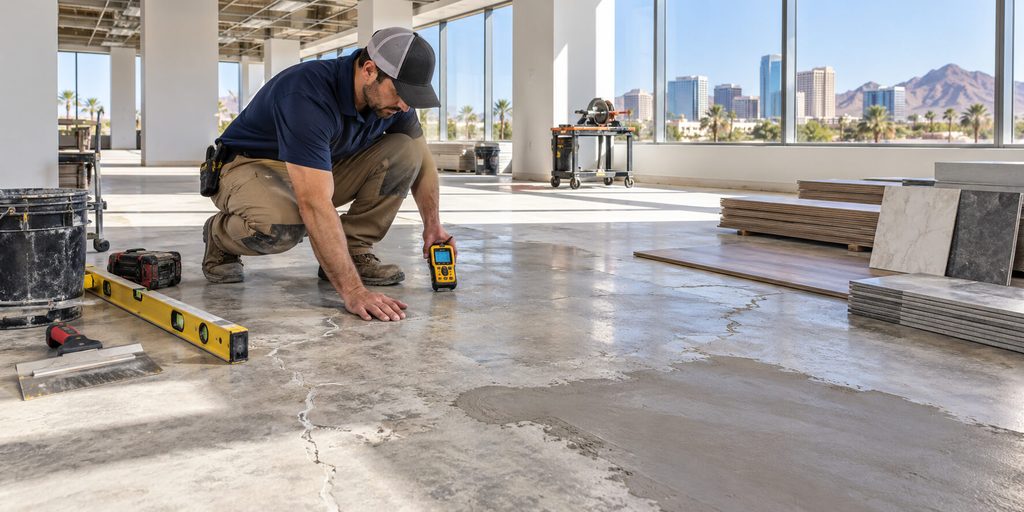
Many Phoenix commercial buildings sit on concrete slabs, and slab condition can affect almost every flooring system installed over them. Cracks, high spots, low spots, adhesive residue, moisture, or damage may need attention first.
Floor preparation should be part of the project from the beginning. Businesses comparing materials can review the best flooring options over concrete slabs in Phoenix to see how LVP, tile, and other surfaces work with the base underneath.
Skipping preparation can lead to unevenness, bonding problems, movement, or premature wear even when the flooring itself is high quality.
Commercial flooring cost depends on material, square footage, site conditions, and preparation. Existing flooring removal, slab repair, leveling, transitions, trim, installation method, and access can all affect the final estimate.
Material price alone does not tell the full story. HydroCare’s Phoenix flooring installation cost guide explains how labor, removal, preparation, and finishing details influence total project cost.
Long-term maintenance matters too. A higher initial price may make sense if the floor lasts longer, is easier to maintain, or allows localized repairs.
Commercial flooring installation must account for customer access, work areas, furniture, equipment, curing time, and reopening schedules.
Some floating floors move quickly when the surface is ready, while tile and coatings may need more time. HydroCare’s flooring installation timeline guide explains how material choice and surface condition affect the schedule.
HydroCare Services provides flooring installation for homes, rentals, and businesses across the Phoenix metro area. As a licensed, insured, and bonded Arizona contractor, ROC 367155, the team evaluates existing flooring, slab or subfloor condition, material choice, layout, transitions, and preparation needs before installation begins.
The goal is to match the flooring to the property and provide a clear scope before work starts. Careful preparation helps the finished floor perform as intended.
If you are replacing worn commercial flooring or planning an upgrade, HydroCare Services can provide a clear estimate based on the space, material, and preparation requirements.
Commercial LVP and LVT are strong all-around options because they combine durability, design flexibility, moisture resistance, and manageable maintenance. Porcelain tile, carpet tile, polished concrete, epoxy, and rubber can be better for specific environments.
Porcelain tile, commercial LVP or LVT, and concrete-based finishes are practical choices for many Arizona properties. The best option also depends on sunlight exposure, tracked-in dust, traffic, and slab condition.
Commercial LVT or LVP, porcelain tile, polished concrete, and properly specified resinous systems are common choices. The right surface depends on whether traffic is mainly pedestrians, carts, rolling chairs, equipment, or heavier loads.
Yes, when the product is rated for the intended commercial environment. Check the wear layer, warranty, installation method, rolling-load requirements, and manufacturer recommendations rather than assuming every residential LVP product will work in a business.
LVP, LVT, and carpet tile are practical office flooring options. Many offices use hard flooring in entrances and corridors while using carpet tile in workspaces or meeting rooms where acoustic comfort matters more.
A sectional couch can take anywhere from a few hours to 24 hours to dry after cleaning. In many cases, professionally cleaned

Professional upholstery cleaning in Phoenix, AZ typically costs around $100 to $300 for a standard service, although the final price depends on
Yes, professional couch cleaning can often remove or significantly reduce cat urine smell. The final result depends on how much urine reached